
Self-Perception & Support Explorer
Explore how a child's understanding of their own abilities evolves as they grow, and compare how different school environments might shape that perception.
Child's Likely Perception
"I try hard, but I'm slower."
Social Risk
High risk of isolation or bullying if support is visible and distinct from peers.
Academic Impact
Can lead to learned helplessness if tasks are consistently too difficult without adequate scaffolding.
Child's Likely Perception
"I go to 'the quiet room' to fix me."
Social Risk
Stigma associated with leaving the group; may feel "singled out" by peers.
Academic Impact
Targeted progress in specific areas, but potential gap widening in core subjects if pull-out time is excessive.
Child's Likely Perception
"This is my community."
Social Risk
Lower internal stigma due to shared norms; higher external stigma when interacting with mainstream peers outside school.
Academic Impact
Curriculum tailored to pace; strong peer bonds often lead to better social confidence.
How you frame challenges impacts self-esteem. Choose the more affirming response below.
Key Strategies for Adults
- ✓ Name it early: Explain conditions in simple biological terms.
- ✓ Highlight strengths first: Anchor identity in what they can do.
- ✓ Peer Education: Teach the whole class about diverse learning styles.
- ✓ Visible Support: Make accommodations public and normalized tools.
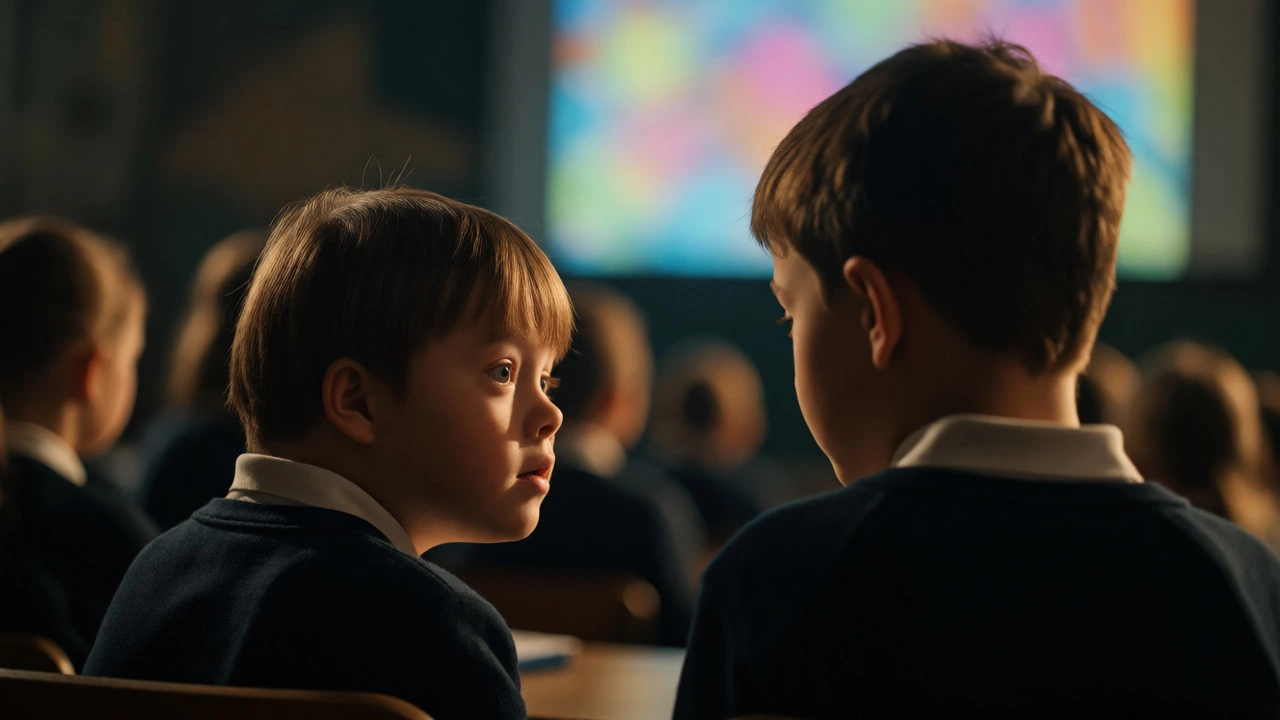
Picture this: You are sitting in a primary school assembly hall. The lights are dimmed for a film about "different abilities." A seven-year-old boy with Down syndrome sits next to his neurotypical friend. He watches the screen, then looks at his friend, then back at the screen. Does he understand that the label on his file-"special educational needs"-is something separate from him? Or does he just see himself as... him?
This is one of the most delicate questions in special needs education. We spend years designing Individualized Education Programs (IEPs), hiring teaching assistants, and modifying curricula. But we rarely ask the children themselves: What do you think you are?
The Age Factor: When Do Kids Start Noticing?
Kids aren’t born knowing what "dyslexia" or "autism spectrum disorder" means. Those are adult labels. But they are incredibly sharp observers of social dynamics. Developmental psychologists often point to the concept of Social Comparison Theory, a framework proposing that individuals determine their own social and personal worth based on how they stack up against others. First proposed by Leon Festinger in 1954, this theory explains why a child notices when everyone else finishes a reading task but they need extra time.
Here is the rough timeline of awareness:
- Ages 3-5: Awareness is physical and immediate. A child might notice their wheelchair is faster than walking, or that their hearing aid makes sounds clearer. They don't yet connect these tools to a "label." They just know their body works differently.
- Ages 6-8: The "Spotlight Effect" kicks in. Children begin to compare performance. If a classmate reads fluently while they sound out words slowly, they start to internalize a sense of difference. This is often where anxiety begins to spike.
- Ages 9-12: Abstract thinking develops. Now they understand categories. They hear terms like "SEN support" or "learning difficulty." They start asking, "Why do I get help and Sarah doesn't?" This is the critical window for identity formation.
- Teens: Identity becomes political and social. Some embrace their diagnosis as part of their story; others fight it, desperate to be "normal." Peer pressure amplifies the fear of being "found out."
It’s not inevitable that they feel lesser. But without guidance, they will fill the silence with their own worst assumptions.
The Label vs. The Person: A Semantic Trap
We need to talk about language. In Ireland and much of Europe, we use terms like General Learning Disability (GLD) or a condition characterized by significant limitations in both intellectual functioning and adaptive behavior. These are clinical descriptors. They are necessary for funding and legal rights. But to a ten-year-old, "disability" sounds broken. "Needs" sounds dependent.
Consider the difference between saying, "You have ADHD," versus "Your brain is wired for high energy and quick shifts." The first defines the child by a deficit. The second describes a trait. Studies from the University of Cambridge suggest that children who view their challenges as specific skills gaps (e.g., "I struggle with spelling") rather than global flaws ("I am stupid") maintain higher self-esteem.
So, do they know they are special? Yes. But often, they interpret "special" as "weird" because society hasn't taught them otherwise. When a Teaching Assistant (TA) pulls them out of class for "speech therapy," the other kids see exclusion. The SEN kid sees confirmation: I don't belong here.
Inclusive Classrooms: Help or Hindrance?
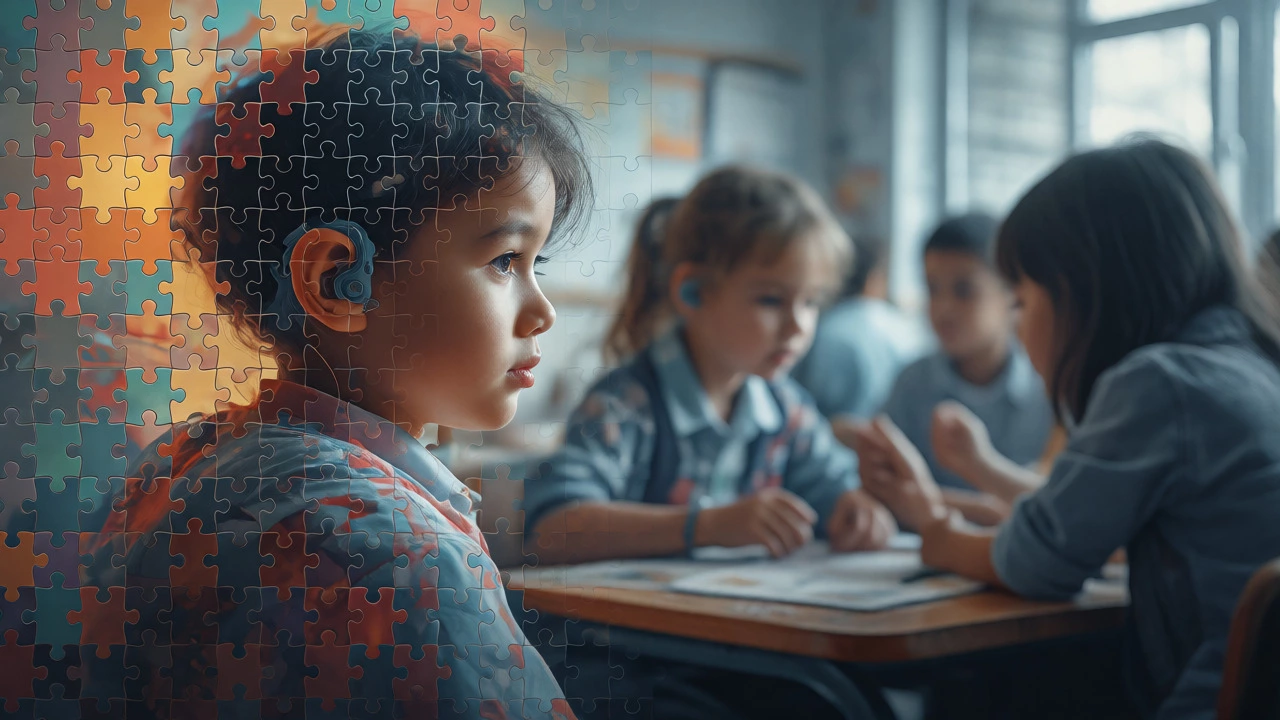
You might think keeping all children together in mainstream schools solves the problem. If everyone is there, no one is "special," right? Not exactly. Inclusion can actually sharpen the contrast.
In a fully inclusive setting, a child with autism might be surrounded by peers who intuitively grasp social cues that escape them. Every failed joke, every missed turn in conversation, becomes data. They learn they miss things others catch. Conversely, in a specialized unit, everyone shares similar challenges. The norm shifts. If everyone uses AAC (Augmentative and Alternative Communication) devices, using one isn't weird-it's standard.
| Setting Type | Child's Likely Perception | Social Risk | Academic Impact |
|---|---|---|---|
| Mainstream (Full Inclusion) | "I try hard, but I'm slower." | High risk of isolation/bullying if support is visible. | Can lead to learned helplessness if tasks are too difficult. |
| Resource Room / Pull-Out | "I go to 'the quiet room' to fix me." | Stigma associated with leaving the group. | Targeted progress, but potential gap widening in core subjects. |
| Special School / Unit | "This is my community." | Lower stigma internally; higher stigma externally. | Curriculum tailored to pace; strong peer bonds. |
The key isn't just where they sit, but how the environment frames their differences. Is the TA seen as a helper, or a babysitter? Is the modified worksheet treated as a secret shame, or a normal tool?
The Role of Parents and Teachers in Framing Reality
Children take their emotional cues from adults. If a parent sighs heavily when discussing school reports, the child learns that their education is a burden. If a teacher speaks about "managing" a student rather than "teaching" them, the child feels managed.
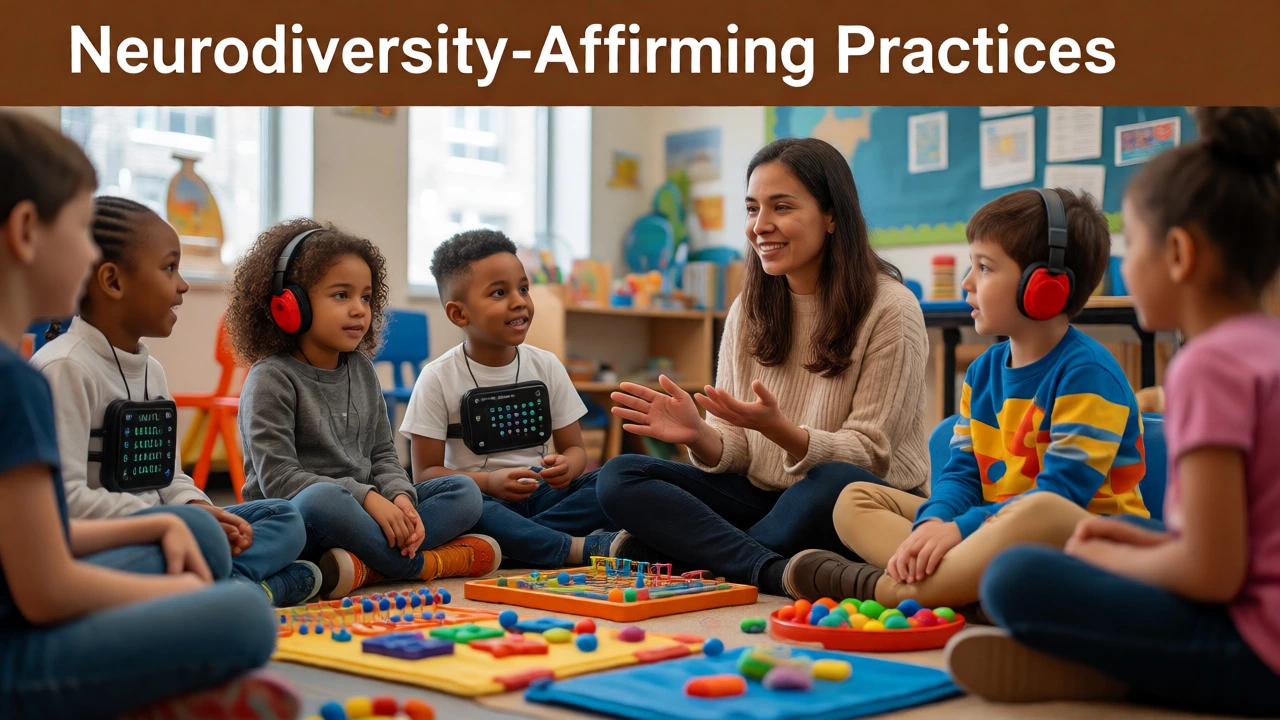
Effective communication changes everything. Instead of hiding diagnoses, many modern educators advocate for Neurodiversity-Affirming Practices, an approach that recognizes neurological differences as natural variations in the human genome rather than deficits. This doesn't mean pretending difficulties don't exist. It means naming them neutrally.
Try this script with a struggling reader: "Your brain is great at big-picture ideas. It just finds decoding letters tricky. That’s why we use audiobooks. It’s like wearing glasses for your eyes."
When you normalize the accommodation, you remove the shame. The child stops asking, "Am I broken?" and starts asking, "How does this work?"
Signs Your Child Is Aware and Struggling
If you are a parent or educator, look for these subtle signals that a child has internalized their "difference":
- Avoidance Behaviors: They refuse to read aloud, even when they know the answer. They prefer activities where their disability is invisible (like drawing over writing).
- Overcompensation: They become the class clown or the athlete to build an identity unrelated to academic struggles.
- Defensive Anger: Sudden outbursts when asked to do homework. This is often frustration masking embarrassment.
- Questioning Fairness: Repeatedly asking why they have to stay in during break for extra help while friends play.
These aren't signs of bad behavior. They are signs of a developing self-concept fighting for survival.
Bridging the Gap: Practical Steps for Adults
So, what do we do? We stop treating "special" as a dirty word. We make it concrete, manageable, and ultimately, irrelevant to their worth.
- Name it early: Don't wait for the crisis. Explain conditions in simple, biological terms. "Some brains process sound differently. Yours does X. That's okay. Here is our toolkit."
- Highlight strengths first: Before listing deficits, list assets. Many children with dyslexia excel in spatial reasoning or storytelling. Anchor their identity in what they can do.
- Peer Education: Teach the whole class about diversity. When neurotypical peers understand that everyone has different learning styles, the "special" label loses its sting.
- Visible Support: Make accommodations public and normalized. If the teacher wears headphones to focus, let the SEN kid wear theirs too. Show that tools are for everyone.
Ultimately, do special ed kids know they are special? Most likely, yes. But with the right support, they can learn that "special" doesn't mean "less than." It just means their path to success looks a little different. And that’s perfectly fine.
At what age do children typically become aware of their learning differences?
Most children begin to notice performance disparities around ages 6 to 8. By ages 9 to 12, they develop a more abstract understanding of diagnostic labels and social categorization, realizing that their experiences differ systematically from their peers.
Does labeling a child with a disability lower their self-esteem?
Not necessarily. Research indicates that ambiguous uncertainty is more damaging than clear labels. Knowing *why* they struggle provides relief and allows for targeted strategies. However, negative framing of the label (focusing only on deficits) can harm self-esteem.
Is it better for SEN children to be in special schools or mainstream classes?
It depends on the individual child. Mainstream inclusion offers social normalization but can increase feelings of inadequacy if support is insufficient. Special schools offer peer belonging but may limit exposure to diverse social dynamics. The best choice balances academic fit with social well-being.
How can parents talk to their child about their special needs?
Use neutral, factual language. Compare the condition to common tools (like glasses for eyes). Focus on strengths and explain that accommodations are tools to access information, not punishments. Avoid apologetic tones that imply the child is a burden.
Do siblings of SEN children also feel the impact of the label?
Yes. Siblings often experience "glass child" syndrome, feeling overlooked due to the intense attention given to the SEN sibling. Open family conversations about fairness and individual needs help mitigate resentment and confusion.

Archer Thornton
Author
I have been dedicated to the field of education for over two decades, working as an educator and consultant with various schools and organizations. Writing is my passion, especially when it allows me to explore new educational strategies and share insights with other educators. I believe in the transformative power of education and strive to inspire lifelong learning. My work involves collaborating with teachers to develop engaging curricula that meet diverse student needs.
Related Post





Write a comment