
Night-Before Exam Cram Timer
Focus Blocks Completed:
0Next Phase:
Break (10m)- Focus (45 min): Use Active Recall. Close books, ask questions, answer from memory.
- Break (10 min): Stretch or get water. No social media scrolling.
- Sleep: After your final block, stop studying. Sleep is non-negotiable for memory consolidation.
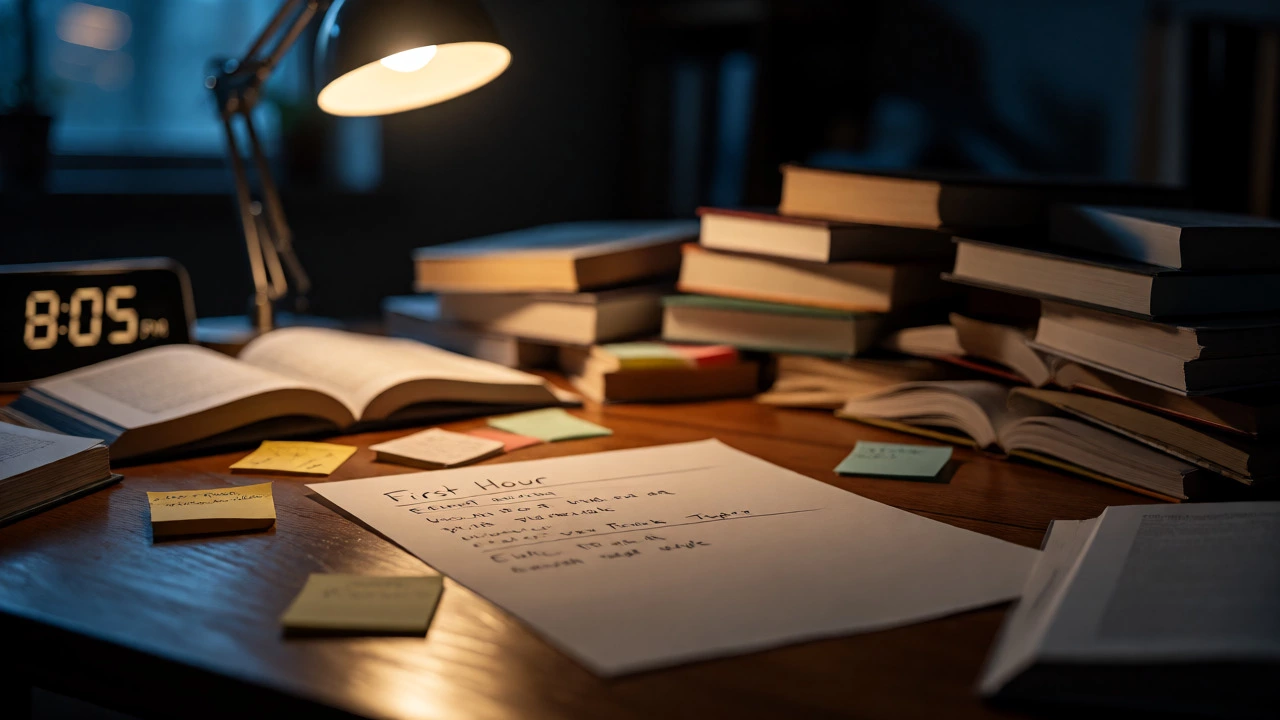
You know that feeling. The clock is ticking, it’s 8 PM, and you suddenly realize your exam is tomorrow morning. Panic sets in. You stare at a pile of notes that looks like it hasn’t been touched since September. Should you drink another coffee? Should you try to read the whole textbook? Or should you just go to bed?
Here is the truth: studying the night before isn’t about learning everything from scratch. It’s about strategic triage. You can’t cover every detail, but you can cover the most important ones if you stop panicking and start prioritizing. This guide walks you through exactly what to do when time is running out, based on how your brain actually works under pressure.
The First Hour: Stop and Plan
Most students make their biggest mistake immediately. They open their laptop or textbook and start reading page one. That’s a trap. Reading passively gives you a false sense of security. You feel like you’re studying because you’re looking at words, but you aren’t retaining much.
Instead, spend the first 15 minutes doing nothing but planning. Grab a blank sheet of paper. Write down three things:
- The Format: Is it multiple choice? Essay-based? Short answer? Knowing this changes what you study. If it’s multiple choice, you need recognition skills (spotting the right answer). If it’s essays, you need structure and key arguments.
- The High-Yield Topics: Look at past papers or lecture summaries. What topics came up repeatedly? These are your gold mines. Ignore the niche details the professor mentioned once in passing.
- Your Weak Spots: Be honest. Which concepts confuse you the most? Spend 60% of your remaining time here. Don’t waste time reviewing stuff you already know perfectly-it feels good, but it doesn’t move the needle.
Technique Over Volume: Active Recall
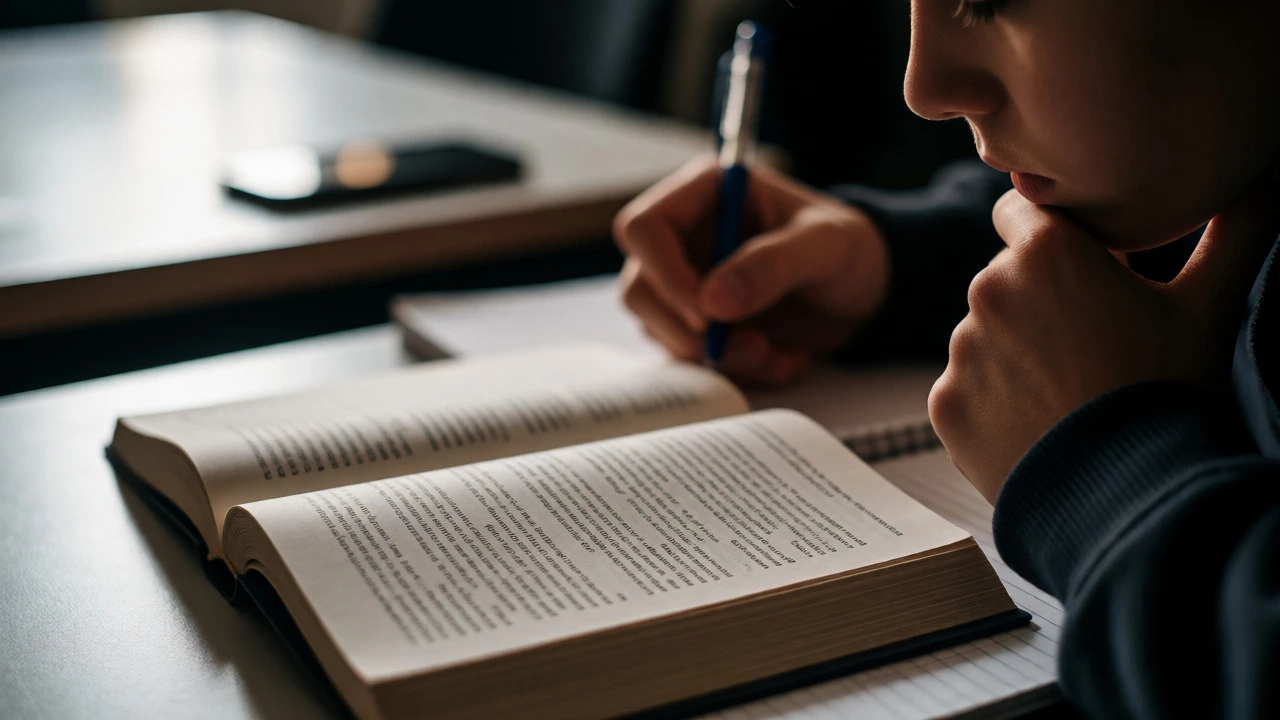
If you only remember one thing from this article, let it be this: Active Recall is a study technique where you actively retrieve information from memory rather than passively reviewing it. Unlike re-reading notes, which is low-effort and low-retention, active recall forces your brain to work harder, strengthening neural pathways.
How do you do it when you have no time? Close your book. Ask yourself a question based on a heading. Try to answer it out loud or write it down without looking. Then check. If you got it wrong, mark it and try again in ten minutes. This method is brutal but efficient. It highlights exactly what you don’t know, so you don’t waste time on what you do.
For example, if you are studying history, don’t re-read the chapter on the Industrial Revolution. Instead, ask: "What were the three main causes?" Force yourself to list them. Then check. This takes seconds per topic and sticks far better than hours of highlighting.
The Pomodoro Twist for Cramming
You might have heard of the Pomodoro Technique, which is a time management method that uses a timer to break work into intervals, traditionally 25 minutes in length, separated by short breaks. Normally, 25-minute blocks are great. But when you are cramming the night before, standard Pomodoros can feel too slow.
Try a modified version: 45 minutes of intense focus, followed by a 10-minute break. During those 45 minutes, your phone must be in another room. Not on silent-another room. The mere presence of a smartphone reduces cognitive capacity, according to research published in the Journal of the Association for Consumer Research. Use the 10-minute break to stretch, get water, or step outside. Do not scroll social media. Scrolling floods your brain with dopamine and makes it harder to return to deep focus. Keep the momentum going.
What to Eat and Drink (And What to Avoid)
Your brain consumes about 20% of your body's energy, even though it’s only 2% of your weight. When you’re stressed, that demand spikes. What you put in your mouth matters more than you think.
Avoid heavy carbs like pizza or pasta right before studying. They cause a blood sugar spike followed by a crash, leaving you foggy and sleepy. Instead, opt for complex carbohydrates and proteins. Think nuts, yogurt, fruit, or eggs. These provide steady energy.
As for caffeine: yes, it helps alertness, but timing is critical. If you take an exam at 9 AM, stop drinking coffee after 2 PM. Caffeine has a half-life of about 5-6 hours. Drinking it late means it’s still in your system when you’re trying to sleep, ruining the consolidation process we’ll talk about next.
| Food/Drink | Impact on Focus | Sleep Disruption Risk | Verdict |
|---|---|---|---|
| Energy Drinks | High initial spike, sharp crash | Very High | Avoid |
| Coffee (before 2 PM) | Moderate boost | Low (if timed right) | Okay |
| Water | Neutral (prevents dehydration) | None | Essential |
| Nuts & Fruit | Steady energy release | None | Best Choice |
| Pizza/Pasta | Sluggishness post-meal | Low | Avoid |
The Non-Negotiable: Sleep
This is where most people fail. They think losing sleep equals gaining study time. Science says otherwise. Sleep is a naturally recurring state of mind and body characterized by altered consciousness, relatively inhibited sensory activity, reduced muscle activity, and inhibition of nearly all voluntary muscles during rapid eye movement (REM) sleep. More importantly for students, sleep is when your brain moves information from short-term memory to long-term storage.
If you pull an all-nighter, you might retain facts for a few hours, but you will struggle to recall them under stress. Studies show that sleep deprivation impairs cognitive performance significantly. A student who studies for 4 hours and sleeps 7 hours will almost always outperform a student who studies for 8 hours and sleeps 3 hours.
Aim for at least 6 hours. Six hours allows you to complete four full sleep cycles. Each cycle includes REM sleep, which is crucial for procedural memory and problem-solving. If you cut sleep short, you lose the ability to connect dots between concepts, making essay questions or complex problems much harder.
Morning Routine: The Final Polish
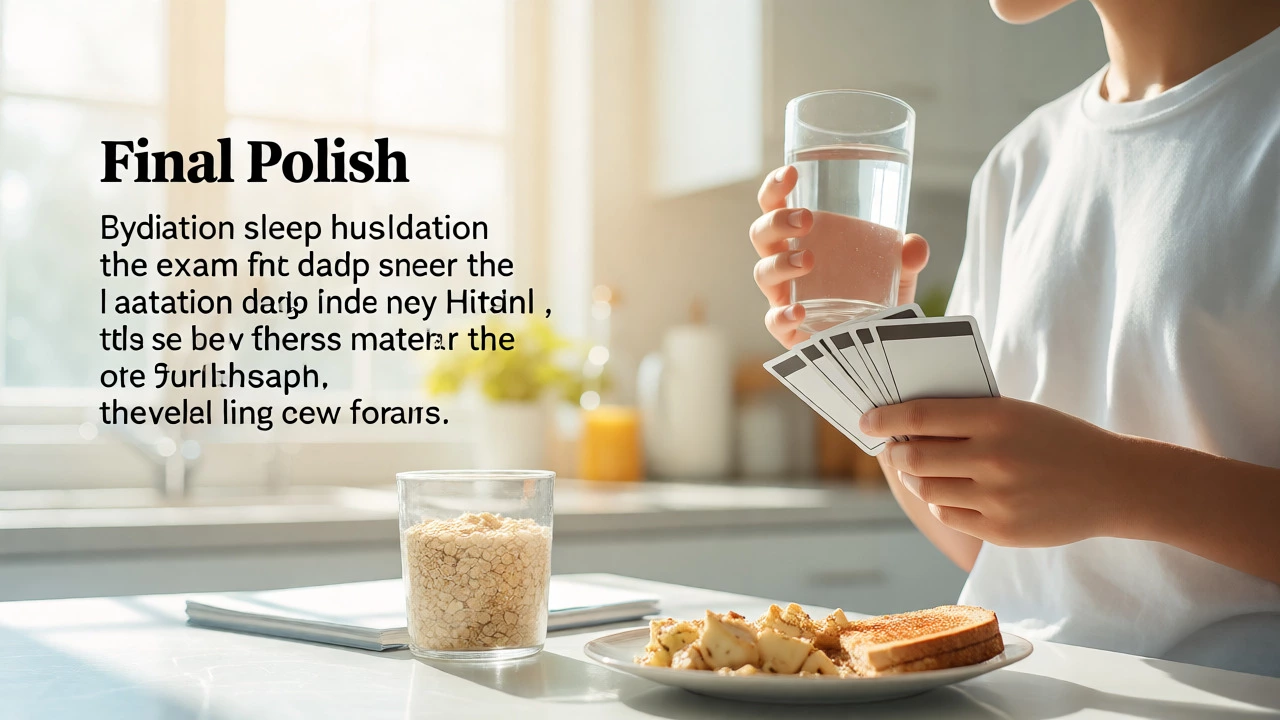
Wake up at your normal time. Don’t wake up earlier than usual unless you absolutely must. Your body needs consistency. Eat a light breakfast-oats or toast with peanut butter. Avoid sugary cereals.
Do not try to learn new material in the morning. Reviewing your "cheat sheet" of high-yield topics is fine. Looking at flashcards for 20 minutes can prime your brain. But trying to grasp a completely new concept while groggy is usually a waste of time. It increases anxiety and lowers confidence.
Arrive at the exam venue early enough to settle in, but not so early that you have time to panic. Bring water. Dehydration shrinks brain tissue slightly and affects concentration. Once the exam starts, scan the entire paper first. Answer the easy questions first to build momentum and secure marks. Save the hard ones for later, when your brain is warmed up.
Common Pitfalls to Avoid
Even with a good plan, small mistakes can derail you. Here are the traps to watch out for:
- The Illusion of Competence: Re-reading your notes makes you feel smart because the information is familiar. Familiarity is not mastery. Always test yourself.
- Ignoring Instructions: Read the exam rubric carefully. Sometimes partial credit is available for showing work, even if the final answer is wrong.
- Over-Caffeinating: Too much coffee leads to jitters and anxiety, which mimics the physical symptoms of nervousness, tricking your brain into thinking you’re failing.
- Studying Alone vs. Group: Studying alone is faster for cramming. Group study often turns into socializing. Save group review for weeks before the exam, not the night before.
Frequently Asked Questions
Is it better to stay up all night or sleep?
Sleeping is almost always better. While staying up all night might allow you to see more material, sleep deprivation severely impacts your working memory and ability to think critically. Even 4-6 hours of sleep is superior to zero sleep for exam performance.
Should I listen to music while studying?
It depends on the task. For rote memorization, instrumental music or white noise can help mask distractions. However, for complex problem-solving or reading comprehension, silence is usually best. Lyrics can interfere with language processing centers in the brain.
How much should I drink?
Stay hydrated, but don't overdo it. Aim for regular sips of water throughout the evening. Excessive water intake right before bed can lead to frequent bathroom trips, disrupting your sleep quality.
Can I use my phone for studying?
Only if it's strictly for reference. Turn off notifications. Better yet, use apps that block social media. The temptation to check Instagram or TikTok is the biggest enemy of focused cramming sessions.
What if I don't understand a topic?
If you've spent 20 minutes and still don't get it, skip it. In a cramming scenario, getting stuck on one difficult concept can eat up valuable time needed for easier points. Mark it, move on, and revisit it only if time permits.





Write a comment