

Degree Time-to-Completion Estimator
Estimate your graduation timeline by accounting for existing credits and your chosen study pace.
Estimated Completion
Remaining Credits Needed: --
Strategic Advice
Select options and click calculate to see your projected graduation date.
Imagine walking across the stage to receive your diploma in just two years instead of four. It sounds too good to be true, but for millions of students, it’s a reality. The shortest degree you can typically earn is an Associate Degree, which usually takes about two years of full-time study. However, with the rise of accelerated learning models and competency-based education, some motivated learners finish even faster.
Why does this matter? Time is money. Every extra year in school means lost wages, accumulated debt, and delayed career entry. If you are looking to pivot careers quickly or enter the workforce without spending half your life in lecture halls, understanding how to compress your timeline is crucial. This guide breaks down exactly what the shortest degrees are, where to find them, and the hidden traps you need to avoid.
The Baseline: What Counts as a "Short" Degree?
In the United States and many other countries, the standard academic hierarchy starts with the Associate Degree. Unlike a bachelor's degree, which requires 120 credit hours, an associate degree typically requires 60 credit hours. At a standard pace of 15 credits per semester, that’s exactly four semesters, or two years. But here is the kicker: you don't have to go at a standard pace.
Accelerated Associate Degrees exist specifically for working adults. Institutions like Western Governors University (WGU) use a competency-based model. Instead of sitting through lectures for a set number of weeks, you prove you know the material. Once you pass the assessment, you move on. Some students finish their entire associate degree in six months if they already have industry experience or prior college credits.
- Standard Associate Degree: 2 years (60 credits)
- Accelerated Online Associate: 12-18 months
- Competency-Based Associate: 6-12 months (varies by student speed)
- Certificate Programs: 3-9 months (not technically a degree, but often confused with one)
Can You Get a Bachelor's Degree Faster?
You might wonder if you can skip the associate degree entirely and get a bachelor's quickly. Technically, yes, but it’s harder. A Bachelor's Degree is a four-year commitment by design. To shorten this, you need aggressive credit transfer strategies.
Many community colleges offer "2+2" programs. You spend two years getting your associate degree, then transfer those credits to a university for the final two years of your bachelor's. If you take summer classes and overload semesters, you can sometimes squeeze a bachelor's into three years. But remember, there is no legitimate accredited institution offering a full bachelor's degree in under two years from scratch. If a website promises a bachelor's in 12 months, check their accreditation status immediately. They might be unaccredited, meaning employers won't respect the credential.
The Role of Online Courses in Speeding Up Graduation
Online Courses are the primary engine behind fast-track degrees today. Traditional universities operate on rigid schedules-fall and spring semesters. Online platforms, however, often use rolling admissions or eight-week terms. This flexibility allows you to start a class the moment you are ready, rather than waiting for September.
Platforms like Coursera, edX, and specialized providers like StraighterLine allow you to test out of general education requirements. For example, instead of taking a semester-long Introduction to Psychology, you might complete a self-paced module and take a proctored exam for a fraction of the cost and time. These credits are accepted by many regionally accredited universities, effectively shaving months off your graduation date.
| Credential Type | Typical Duration | Fastest Possible Time | Best For |
|---|---|---|---|
| Certificate | 3-6 Months | 4 Weeks | Specific skill acquisition (e.g., coding bootcamps) |
| Associate Degree | 2 Years | 6-12 Months | Entry-level management, nursing assistants, IT support |
| Bachelor's Degree | 4 Years | 2-3 Years | Professional careers requiring a baseline degree |
| Master's Degree | 2 Years | 1 Year | Specialized leadership roles, advanced technical fields |

Hidden Costs of Going Fast
Speed isn't free. When you accelerate your education, you trade comfort for intensity. Here is what you need to watch out for:
Financial Aid Limitations: Many federal financial aid programs require you to be enrolled in a minimum number of credits over a specific period. If you finish too quickly, you might lose eligibility for grants or loans. Always talk to a financial aid advisor before dropping classes to speed up.
Accreditation Traps: There is a difference between national and regional accreditation. Regional accreditation is the gold standard in the US. Many fast-track, for-profit schools hold only national accreditation. While cheaper and faster, these degrees may not transfer to other universities if you decide to pursue a master's later. Verify the accreditor on the Database of Accredited Postsecondary Institutions and Programs.
Networking Loss: Part of the value of college is who you meet. Accelerated online programs often lack the robust campus culture, clubs, and face-to-face networking opportunities. You have to be proactive. Join LinkedIn groups, attend virtual career fairs, and reach out to professors directly to build connections.
Which Fields Offer the Shortest Paths?
Not all majors are created equal when it comes to speed. STEM fields (Science, Technology, Engineering, Math) often have heavy lab components and sequential prerequisites that make rushing difficult. You can't rush organic chemistry labs. However, humanities, business, and computer science tend to be more flexible.
Consider these high-speed friendly majors:
- Business Administration: Highly modular. Many concepts are theoretical and easy to assess via exams rather than labs.
- Computer Information Systems: If you already code, you can test out of introductory programming classes.
- Healthcare Administration: Different from clinical nursing (which requires strict hour counts), admin roles focus on policy and management, allowing for faster coursework completion.
- Liberal Arts: General education requirements are broad, making it easier to substitute online courses for traditional ones.
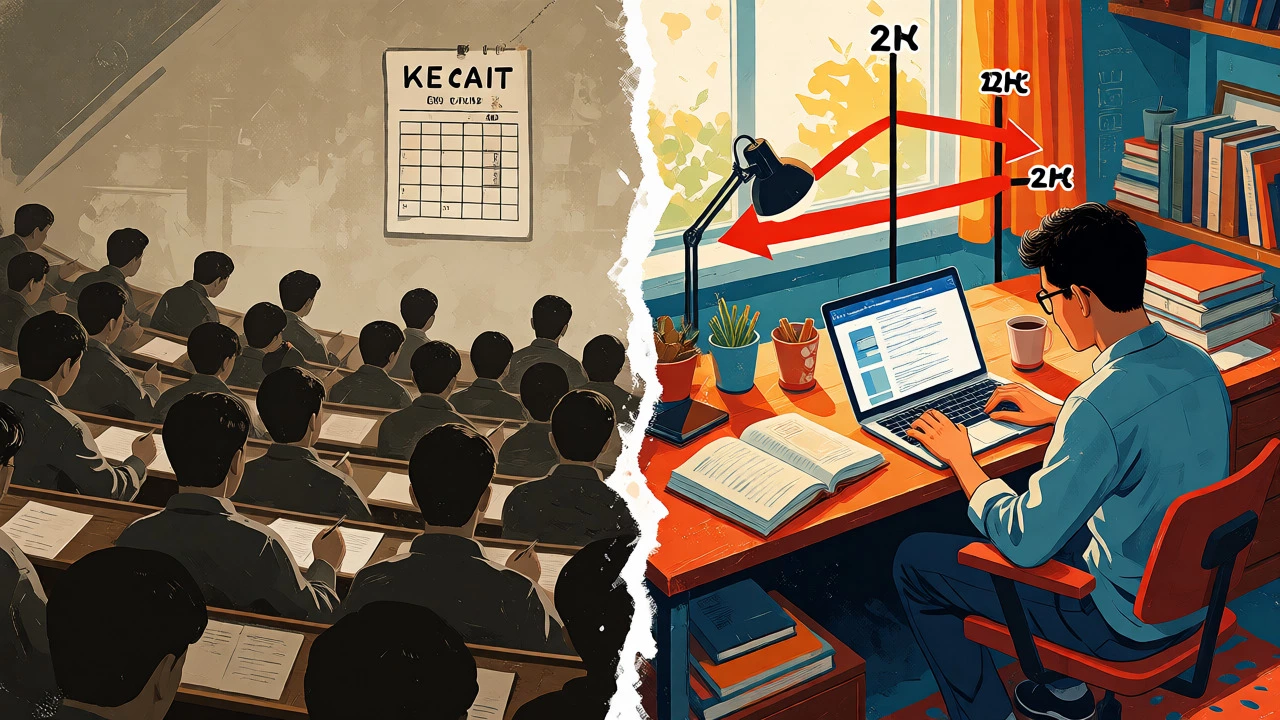
How to Actually Finish in Under Two Years
If you are determined to get the shortest degree possible, follow this roadmap:
- Audit Your Credits: Before enrolling anywhere, get your previous college transcripts evaluated. Did you take dual-enrollment classes in high school? Have CLEP (College Level Examination Program) scores? These can wipe out 10-20 credits instantly.
- Choose Competency-Based Education (CBE): Look for schools like WGU, Southern New Hampshire University (SNHU), or Excelsior University. Their models reward knowledge, not seat time.
- Maximize Summer Terms: Don't stop in June and July. Take two classes each summer term. That’s 6-12 credits added to your total without extending your calendar year.
- Use Credit-by-Exam Services: Platforms like Study.com or Sophia.org partner with many universities. You can complete a general education requirement in a weekend for $100-$200, compared to $1,000+ at a traditional college.
- Stay Organized: In an accelerated program, one missed deadline can push you back a whole term. Use a digital planner and set reminders for every assignment submission window.
Frequently Asked Questions
Is a 2-year degree worth it compared to a 4-year degree?
It depends on your career goals. For fields like dental hygiene, paralegal studies, or IT support, an associate degree is often sufficient and leads to immediate employment. For corporate management or specialized engineering, a bachelor's is usually required. However, starting with an associate degree saves money and allows you to earn while you learn.
Can I get a bachelor's degree in one year?
Generally, no, unless you already have significant transfer credits. Completing 120 credits in 12 months requires an unrealistic course load. Most accelerated bachelor's programs take at least two to three years for new students. Beware of institutions promising a one-year bachelor's; they are often unaccredited.
Do employers respect accelerated online degrees?
Yes, provided the institution is regionally accredited. Employers care more about the skills you demonstrate and the reputation of the accrediting body than whether you studied online or offline. Highlight any practical projects or internships completed during your fast-track program to boost credibility.
What is the cheapest way to get a degree quickly?
Community colleges combined with credit-by-exam services are usually the most affordable route. Public state universities also offer lower tuition rates for residents. Avoid expensive private for-profit schools unless they offer a unique competency-based structure that significantly reduces your time-to-degree.
Are certificates considered degrees?
No. Certificates are shorter and focused on specific skills, while degrees provide a broader educational foundation including general education. Some jobs accept certificates, but many HR departments filter for 'degree' holders. Check job postings carefully to see if a certificate qualifies.








Write a comment