
Adult Learning Style Analyzer
Drag the slider to indicate how much you agree with these statements about learning.
"I need to know why I am learning this before I start."
"I learn best when my past experiences are discussed."
"I prefer to set my own learning goals rather than follow a syllabus."
"I want to apply what I learn immediately to real life problems."
"I am driven by internal growth more than external grades/praise."
Your Result
Ready to Analyze?
Adjust the sliders on the left to see where your learning style falls on the spectrum.
When you hear "adult education," what comes to mind? Is it a night class at a community college? An online certification for your job? Or perhaps a workshop on financial literacy? For decades, the field has been dominated by one name: Malcolm Knowles. He is widely recognized as the father of modern adult education. But why him? And who were the giants standing behind him?
This isn't just about memorizing names for a history test. Understanding these pioneers helps you grasp *how* adults learn differently than children. It changes how we design training programs, how teachers approach students over 25, and how you might approach your own learning journey. Let’s break down the key figures who built this field.
The Man Who Coined the Term: Malcolm Knowles
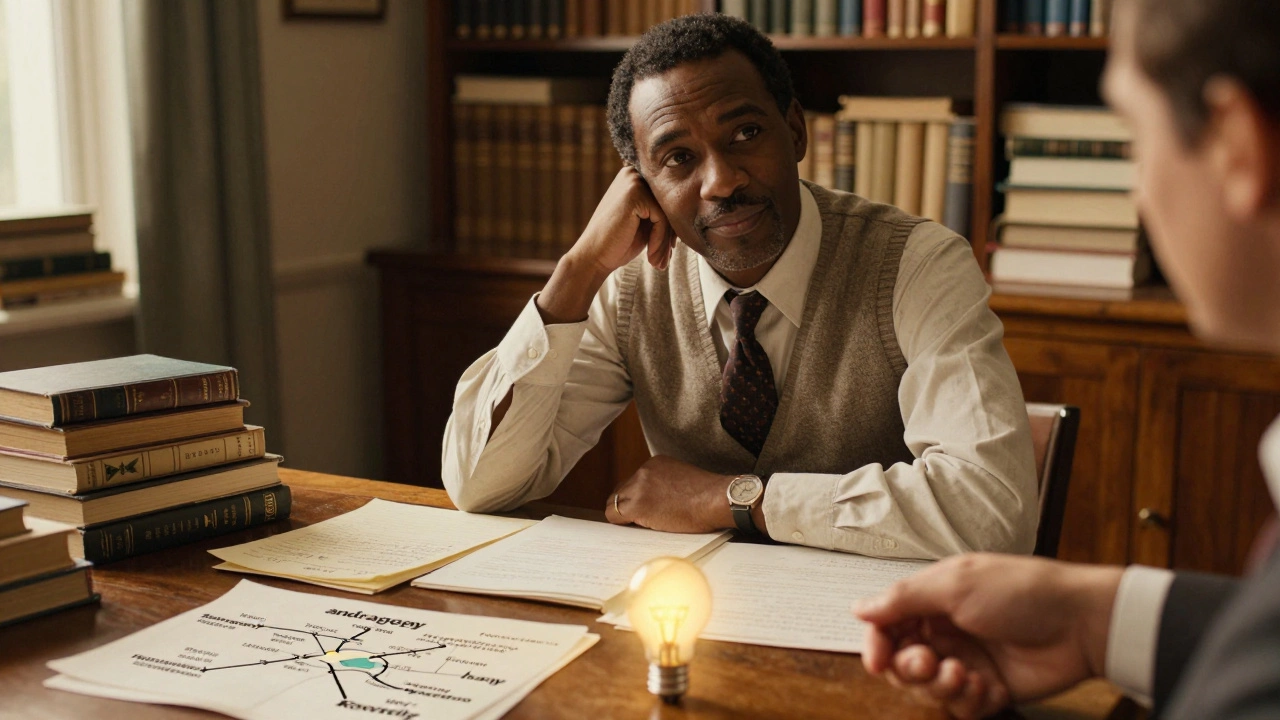
Malcolm Knowles (1913-1997) is the central figure in adult education. Before his work, most educational theories were based on how children learn-a concept called pedagogy. Knowles argued that treating adults like big kids was ineffective and insulting. In the 1960s and 70s, he developed andragogy, which translates roughly to "the art and science of helping adults learn."
Knowles didn't invent the idea that adults are different; he systematized it. He proposed six core assumptions about adult learners:
- Self-concept: Adults need to be self-directed. They resist situations where they feel others are imposing their will on them.
- Experience: Adults bring a reservoir of experience. This is a rich resource for learning through methods like discussion and problem-solving.
- Readiness to learn: Adults become ready to learn those things they need to know to cope effectively with real-life situations.
- Orientation to learning: Unlike children, who are subject-centered, adults are life-centered or task-centered. They want to apply knowledge immediately.
- Motivation: While adults respond to some external motivators (better jobs, promotions), the most potent motivators are internal (self-esteem, quality of life).
- Need to know: Adults need to know *why* they need to learn something before undertaking it.
If you’ve ever sat through a boring corporate training session that felt irrelevant, you’ve experienced the failure of applying pedagogy to adults. Knowles gave educators the blueprint to fix that.
The Philosophical Roots: Paulo Freire
While Knowles focused on the psychology of learning, Paulo Freire (1921-1997) focused on the politics and philosophy of it. You can’t talk about adult education without mentioning his seminal book, Pedagogy of the Oppressed (1968).
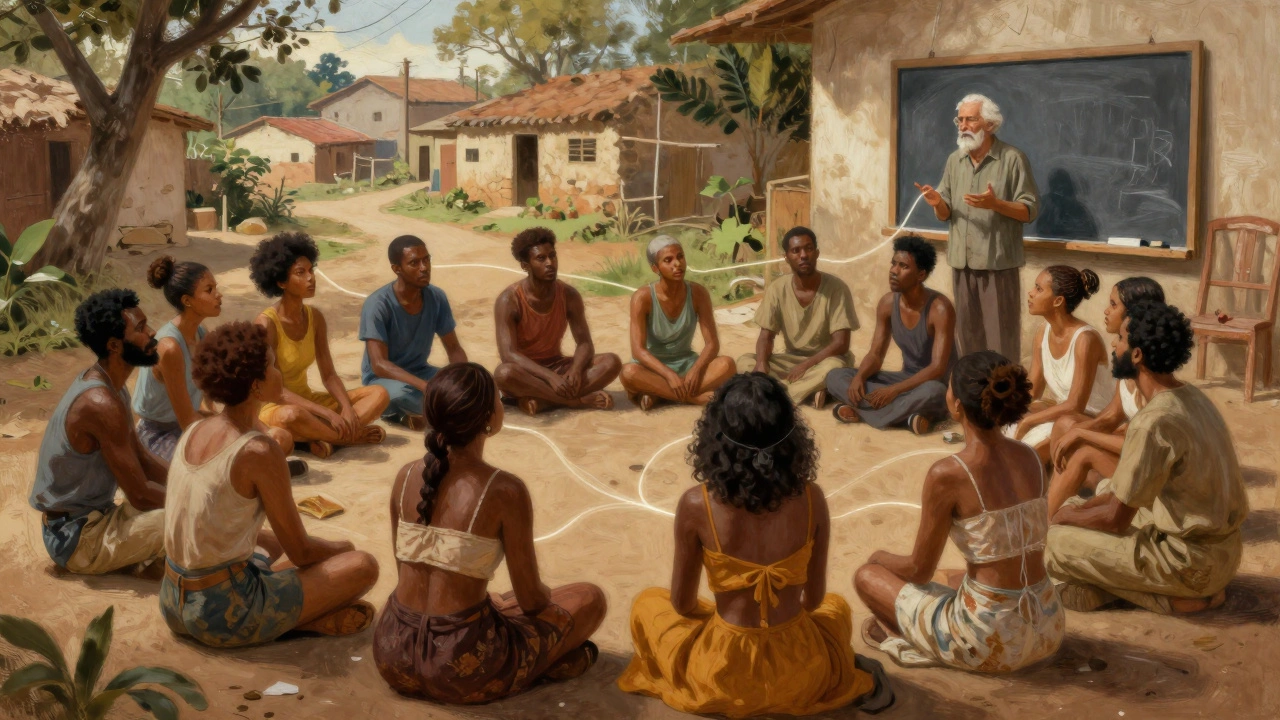
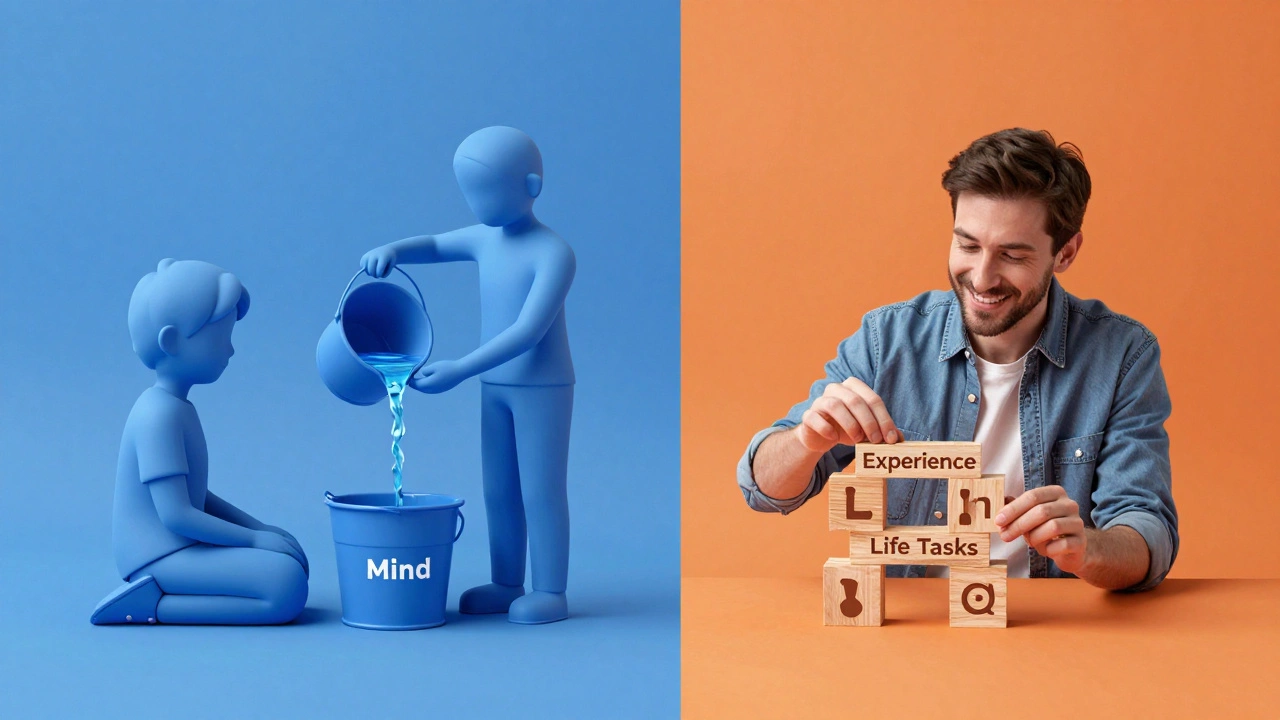
Freire criticized the "banking model" of education, where teachers deposit information into empty student minds. He argued that adult education should be a dialogue. Learners and teachers co-create knowledge. For Freire, education was an act of liberation. If you look at community-based adult literacy programs today, especially in developing nations, you’ll see Freire’s influence everywhere. He taught us that adult education isn't just about skills; it's about empowerment.
The Early Pioneers: Robert Maynard Hutchins and Others
Before Knowles formalized andragogy, others were laying the groundwork. Robert Maynard Hutchins (1899-1977), president of the University of Chicago, championed liberal education for adults. He believed that higher education shouldn't end with a degree. His work helped establish extension schools, bringing university-level courses to working adults outside the traditional campus setting.
Then there’s John Dewey (1859-1952). Though often associated with general progressive education, Dewey’s ideas on experiential learning-learning by doing-are foundational to adult ed. He argued that education must be connected to life experiences. Without Dewey’s push for practical, relevant schooling, Knowles’ andragogy wouldn’t have had a philosophical home.
Why Does This Distinction Matter Today?
You might wonder, "So what? I’m not writing a thesis." Here’s why it matters for you right now:
- Better Training Design: If you’re an HR manager or team lead, knowing that adults need context (the "why") before details means your next training module won’t flop.
- Personal Learning: If you’re trying to learn a new skill-coding, cooking, a language-and you’re stuck, remember Knowles’ principle: connect it to your life. Why do you want this? How will it change your daily routine?
- Respect for Experience: Adult learners aren’t blank slates. Acknowledging your past experiences makes learning faster and deeper.
Comparison: Pedagogy vs. Andragogy
| Aspect | Pedagogy (Child-Learning) | Andragogy (Adult-Learning) |
|---|---|---|
| Learner Dependency | Dependent on teacher | Self-directed |
| Role of Experience | Little value; limited relevance | Rich resource; basis for learning activities |
| Readiness to Learn | Determined by biological age | Determined by social roles and tasks |
| Learning Orientation | Subject-centered | Problem-centered |
| Motivation | External (grades, praise) | Internal (quality of life, curiosity) |
This table highlights why a child might study algebra because the teacher said so, while an adult studies statistics to analyze business data. The driver is completely different.
Critiques and Modern Views
It’s important to note that Knowles’ theories aren’t perfect. Some critics argue that andragogy assumes all adults are self-directed, which isn’t always true. Cultural differences also play a huge role. In some cultures, respecting authority means accepting instruction passively, regardless of age. Modern researchers like Sharan Merriam have expanded on Knowles, adding layers about social context and technology. Today, we blend andragogy with digital learning strategies, recognizing that online platforms allow for even greater self-direction.
Is Malcolm Knowles the only father of adult education?
No. While Knowles is the most famous for coining "andragogy," others like Paulo Freire, John Dewey, and Robert Maynard Hutchins made critical contributions. Think of Knowles as the architect who put the final roof on a house built by many.
What is the difference between pedagogy and andragogy?
Pedagogy is the method and practice of teaching children. Andragogy is the method and practice of teaching adults. The main difference lies in self-direction, experience, and motivation. Adults are typically more self-directed and motivated by internal factors.
How did Paulo Freire influence adult education?
Freire introduced the idea that education should be a dialogue, not a monologue. He emphasized critical consciousness and empowerment, particularly for marginalized adults. His work shifted the focus from mere skill acquisition to social change.
Are Knowles' theories still relevant in 2026?
Yes. With the rise of online learning and micro-credentials, self-directed learning is more prevalent than ever. Knowles' principles help designers create flexible, relevant content that respects the learner's time and experience.
Who else contributed to the field of adult education?
Other key figures include John Dewey (experiential learning), Robert Maynard Hutchins (liberal education for adults), and Sharan Merriam (contemporary research on adult learning contexts). Each added a piece to the puzzle.








Write a comment