

Asperger's Trait Recognition Tool
1. Social Communication
How do you typically handle idioms, sarcasm, or metaphors (e.g., "break a leg")?
2. Sensory Processing
How do you react to environments with bright fluorescent lights or loud overlapping conversations?
3. Routines & Changes
What happens when your daily schedule or plans change unexpectedly?
4. Special Interests
Do you have intense, narrow interests that you love discussing in detail?
Imagine walking into a room where the lights feel like they’re screaming at your eyes, and everyone is talking about the weather, but you’re stuck on why the pattern of the carpet looks wrong. For many people with Asperger’s syndrome, this isn’t an exaggeration-it’s Tuesday. While the term "Asperger’s" was officially folded into Autism Spectrum Disorder (ASD) in the DSM-5 back in 2013, the label still carries weight. It describes a specific profile within the spectrum: individuals who typically have average or above-average intelligence and no significant delays in language development, yet struggle deeply with social interaction and repetitive behaviors.
If you’re asking what the signs are, you might be trying to understand yourself, a child, or a colleague. The goal here isn’t to diagnose-that’s for clinicians-but to recognize patterns. Identifying these traits early can change everything from how we teach in classrooms to how we design workplaces. Let’s break down the 12 most common indicators, moving beyond stereotypes to see the real human experience behind them.
Social Communication Challenges
The core of Asperger’s lies in how we connect with others. It’s not that people with Asperger’s don’t want to connect; it’s that the rulebook for social interaction is often unwritten, confusing, and constantly changing.
- Difficulty Reading Non-Verbal Cues: This is perhaps the most visible sign. If someone rolls their eyes or crosses their arms, a neurotypical person might instantly sense annoyance or defensiveness. Someone with Asperger’s might miss these signals entirely, interpreting the words literally while missing the tone. They might smile when told bad news because they are mimicking what they think is appropriate, not because they are happy.
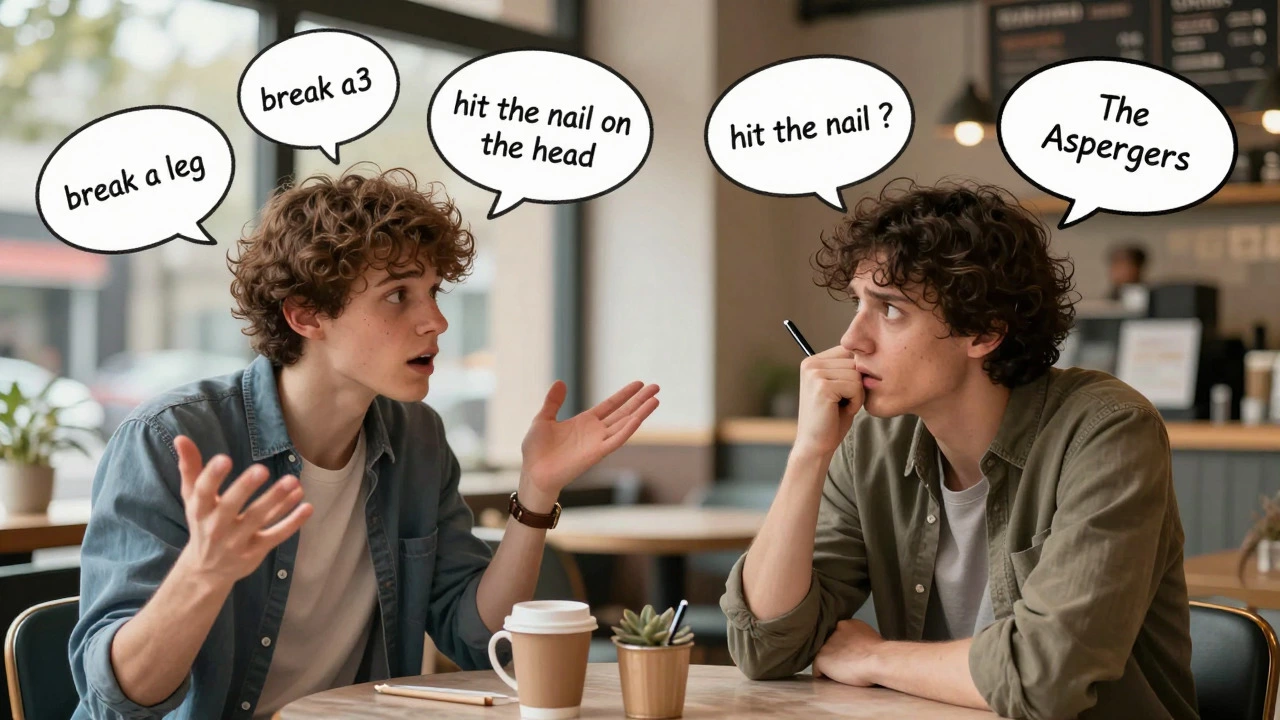
- Literal Interpretation of Language: Idioms, sarcasm, and metaphors can be minefields. If you tell someone with Asperger’s to “break a leg,” they might genuinely worry about orthopedic injury. This literal thinking extends to instructions too. Ambiguity causes anxiety because there is no clear “right” answer.
- Monologuing on Special Interests: Have you ever talked to someone who launches into a ten-minute detailed explanation of train schedules or dinosaur diets without checking if you’re still listening? This isn’t rudeness; it’s passion. People with Asperger’s often have intense, narrow interests. Sharing this knowledge is their way of bonding, even if the other person is nodding politely just to escape.
- Struggles with Reciprocal Conversation: A typical conversation is like a tennis match-back and forth. For someone with Asperger’s, it can feel like a lecture. They might forget to ask questions, interrupt because they’re excited, or stand too close because they don’t intuitively grasp personal space boundaries.
Sensory Processing Differences
Sensory issues are often the hidden engine driving behavioral signs. The brain processes input differently, making ordinary environments overwhelming or under-stimulating.
- Hypersensitivity to Sound: The hum of a refrigerator, the scratch of a wool sweater, or overlapping conversations in a café can cause physical pain. This isn’t just “being picky.” It’s neurological overload. Many adults with Asperger’s wear noise-canceling headphones not for music, but for survival.
- Visual Overload: Fluorescent lights flickering at a frequency invisible to most people can trigger migraines or anxiety. Patterns, bright colors, or cluttered spaces can make it hard to focus on any single task. This is why minimalist workspaces are often preferred.
- Tactile Defensiveness: Certain textures in food (like mushy peas) or clothing tags can be unbearable. You might see someone picking at a loose thread until it comes off, or refusing to wear shoes without socks. These are attempts to regulate a nervous system that is firing on all cylinders.
Behavioral Patterns and Routine
Predictability is comfort. When the world feels chaotic socially and sensorily, rigid routines provide a safety net.
- Adherence to Routines: Changing plans last minute can cause disproportionate distress. If a student with Asperger’s expects math at 9 AM and gets history instead, they might shut down. The routine isn’t just preference; it’s a cognitive framework that helps them navigate the day.
- Repetitive Movements (Stimming): Rocking, hand-flapping, or pacing are self-regulatory behaviors known as stimming. These actions help release excess energy or calm anxiety. In childhood, these are obvious. In adulthood, they might become subtler, like tapping a pen repeatedly or clicking a fidget toy.
- Intense Focus on Details: While others see the forest, someone with Asperger’s sees every tree, leaf, and bug. This attention to detail is a superpower in fields like coding, data analysis, or editing. However, it can also mean missing the “big picture” in social situations or project planning.

Emotional and Cognitive Traits
Emotional expression and processing follow a different path for many on the spectrum.
- Flat or Inappropriate Affect: Facial expressions might not match internal feelings. A person might look bored during a wedding speech while feeling deeply moved inside. This mismatch leads to misunderstandings, where others assume indifference rather than difficulty expressing emotion.
- Black-and-White Thinking: Morality and rules are often seen as absolute. Fairness is paramount. If a rule is broken, even slightly, it can cause significant upset. This rigidity can clash with the nuanced, gray-area nature of adult life and workplace politics.
| Trait | Neurotypical Response | Asperger's Response |
|---|---|---|
| Sarcasm | Understands intent immediately | Takes words literally; may need explicit explanation |
| Sensory Input | Filters out background noise automatically | Processes all sounds equally; can lead to overload |
| Routine Change | Adapts with minor inconvenience | May experience high anxiety or meltdown |
| Social Bonding | Small talk builds rapport | Deep dives into special interests build trust |
Why These Signs Matter in Education and Work
Recognizing these 12 signs isn’t about labeling; it’s about accommodation. In special needs education, understanding that a child isn’t “disruptive” but “overwhelmed” changes the teacher’s approach. Instead of punishment, they offer a quiet corner. In the workplace, knowing an employee prefers written instructions over vague verbal hints boosts productivity.
The shift from Asperger’s to ASD Level 1 in diagnostic manuals reflects a better understanding of continuity. But the community still uses the term because it captures a specific identity. Whether you call it Asperger’s or high-functioning autism, the support needs remain similar: clarity, predictability, and respect for different ways of being.
Is Asperger's considered a disability?
Yes, legally and functionally. Under laws like the Equality Act in the UK or the ADA in the US, Asperger's (now classified under Autism Spectrum Disorder) is recognized as a disability because it can substantially limit major life activities, particularly social interaction and communication. However, many individuals view it as a neurodivergence-a different way of thinking-rather than a deficit.
Can you grow out of Asperger's?
No, you cannot grow out of it because it is a lifelong neurological condition. However, many people learn coping mechanisms and social skills that mask their symptoms effectively. This is called "camouflaging." While it helps in social situations, it can lead to burnout because maintaining the facade requires immense mental energy.
What is the difference between Asperger's and Autism?
Historically, Asperger's was distinguished by normal language development and higher IQ. Today, both fall under the umbrella of Autism Spectrum Disorder (ASD). The distinction is largely historical. Clinicians now use levels of support needed (Level 1, 2, or 3) rather than separate labels. Most people who would have been diagnosed with Asperger's in the past are now diagnosed with ASD Level 1.
Do people with Asperger's have empathy?
Yes, absolutely. There is a myth that people with Asperger's lack empathy. In reality, they often have high cognitive empathy (understanding facts) but struggle with affective empathy (intuitively feeling another's emotion due to missed cues). Many report feeling overwhelmed by others' emotions because they feel them deeply but don't know how to respond appropriately.
How do you get diagnosed with Asperger's as an adult?
Adult diagnosis involves seeing a specialist psychologist or psychiatrist experienced in adult autism. The process includes clinical interviews, questionnaires about childhood history, and observations of current behavior. It’s important to find a professional who understands that women and minorities often present differently and may have masked their symptoms for years.







Write a comment