

Study Schedule & Retention Simulator
Configuration
Your Spaced Repetition Plan
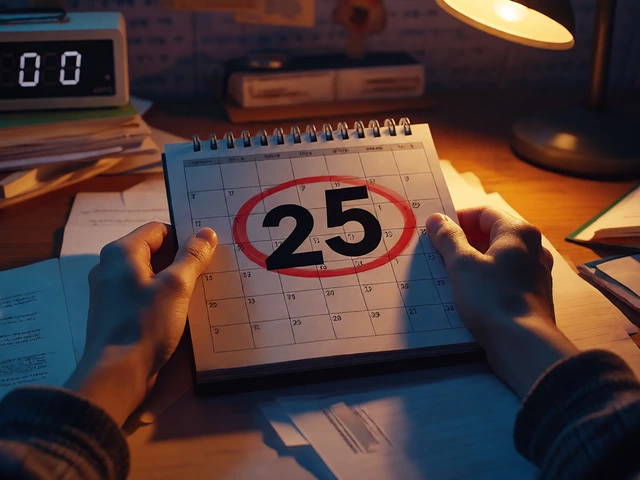
You have an exam in three days. The textbook is thick, the concepts are dense, and your brain feels like a browser with too many tabs open. You want to absorb that information instantly, but cramming usually leads to panic and blanking out under pressure. The good news is that memorizing faster isn’t about having a photographic memory; it’s about using the right cognitive tools.
We aren't going to talk about drinking coffee or pulling all-nighters. Those are traps. Instead, we will look at evidence-based methods that leverage how your brain actually stores data. By switching from passive reading to active engagement, you can cut study time in half while retaining more information long-term.
Key Takeaways
- Active Recall beats re-reading every time because it forces your brain to retrieve information, strengthening neural pathways.
- Spaced Repetition combats the forgetting curve by reviewing material at increasing intervals just before you forget it.
- The Memory Palace technique uses spatial navigation to anchor abstract facts to vivid mental images.
- Sleep is not downtime; it is when your brain consolidates short-term memories into long-term storage.
- Multitasking destroys focus. Single-tasking with timed intervals (Pomodoro) creates deeper encoding.
Stop Re-Reading: The Power of Active Recall
Most students study by highlighting text or re-reading notes until they feel familiar. This is the illusion of competence. Just because you recognize the material doesn’t mean you can reproduce it on demand. To memorize insanely fast, you need to switch to Active Recall. This is the process of actively stimulating your memory during the learning process rather than passively reviewing it.
Think of it like lifting weights. Reading a paragraph is like looking at a weight. Active recall is actually lifting it. When you close the book and try to explain the concept out loud or write it down from scratch, you are forcing your brain to work. That struggle is where the learning happens. Every time you successfully retrieve a piece of information, you make it easier to retrieve next time.
Here is how to apply this immediately:
- Create flashcards with questions on one side and answers on the other. Use physical cards or apps like Anki.
- After reading a chapter, put the book away and write down everything you remember on a blank sheet of paper.
- Teach the concept to an imaginary student or a pet. If you stumble, you’ve found a gap in your knowledge.
Beat the Forgetting Curve with Spaced Repetition
Your brain is designed to forget. This is called the Ebbinghaus Forgetting Curve. Without reinforcement, you lose about 50% of new information within an hour and up to 70% within 24 hours. To memorize fast, you must interrupt this decay pattern. Enter Spaced Repetition.
Instead of studying a topic for five hours in one day (massed practice), you study it for thirty minutes over ten days. The key is timing. You review the material just as you are about to forget it. This signals to your brain that the information is important and needs to be stored permanently.
A simple schedule looks like this:
- Learn the material today.
- Review it after 1 day.
- Review it again after 3 days.
- Review it again after 7 days.
- Review it again after 21 days.
Digital tools automate this for you. Apps use algorithms to show you difficult cards more often and easy cards less frequently. This ensures you spend your energy on what you don’t know, not what you already mastered.

Visualize It: The Memory Palace Technique
If you need to memorize lists, sequences, or complex structures, linear notes might fail you. Try the Method of Loci, also known as the Memory Palace. This ancient Greek technique leverages your brain’s superior ability to remember spatial locations and vivid imagery.
Your brain has a dedicated system for navigation (the hippocampus). By hooking abstract information onto familiar physical spaces, you bypass the limits of rote memorization. Here is how to build one quickly:
Choose a place you know well, like your home. Walk through it mentally. Now, take the items you need to memorize and place them in specific rooms. Make the images bizarre, emotional, or funny. The weirder the image, the stickier the memory.
For example, if you need to remember that mitochondria are the powerhouse of the cell, imagine a giant battery exploding in your kitchen, powering your toaster. When you need to recall the fact, simply walk through your house in your mind and see the explosion. The location triggers the image, which triggers the fact.
Chunking: Simplify Complex Data
Your working memory can only hold about four to seven items at once. Trying to memorize a long string of numbers or a complex biological process all at once overwhelms this capacity. Chunking solves this by breaking large pieces of information into smaller, manageable groups.
Think of phone numbers. We don’t memorize ten random digits; we memorize three chunks (area code, prefix, line number). Apply this to your studies. If you are learning history, group events by decade or theme. If you are coding, group functions by their purpose. By creating logical clusters, you reduce the cognitive load and allow your brain to encode the information more efficiently.
The Role of Sleep and Physiology
No amount of clever technique will work if your biology is against you. Sleep is not just rest; it is an active phase of memory consolidation. During deep sleep, your brain replays the day’s learning experiences, moving them from short-term storage in the hippocampus to long-term storage in the cortex.
Sacrificing sleep to study is counterproductive. You might retain the information for the immediate test, but you will likely forget it shortly after. Aim for seven to nine hours of quality sleep. Additionally, exercise boosts blood flow to the brain and releases Brain-Derived Neurotrophic Factor (BDNF), a protein that supports the survival of existing neurons and encourages the growth of new synapses.

Focus Management: The Pomodoro Technique
Distraction is the enemy of memorization. Every time you check your phone, you reset your focus timer. It takes roughly twenty-three minutes to get back into a state of deep focus. To memorize fast, you need sustained attention. The Pomodoro Technique helps structure this.
Set a timer for twenty-five minutes of intense, distraction-free study. Then take a five-minute break. After four cycles, take a longer break of fifteen to thirty minutes. This rhythm prevents mental fatigue and keeps your retention rates high. During the study interval, your phone should be in another room. During the break, do not scroll social media; stretch, drink water, or look out a window.
| Method | Efficiency | Best For | Common Pitfall |
|---|---|---|---|
| Passive Re-reading | Low | Familiarity | Illusion of competence |
| Active Recall | High | Long-term retention | Feels difficult initially |
| Spaced Repetition | Very High | Vocabulary and facts | Requires consistent scheduling |
| Memory Palace | High | Sequences and lists | Time-consuming setup |
Practical Application for Exams
To combine these strategies for maximum speed, follow this workflow. First, skim the material to understand the big picture. Identify the key concepts and chunk them. Next, create active recall questions for each chunk. Do not just highlight; write questions. Then, use a spaced repetition app to schedule reviews. Finally, for any stubborn lists or processes, build a quick memory palace.
Remember, the goal is not to read every word but to understand and retrieve the core ideas. Prioritize high-yield topics. If you are preparing for a multiple-choice exam, focus on distinguishing between similar concepts. If it is an essay exam, focus on structuring arguments and recalling key evidence.
Overcoming Mental Blocks
Sometimes, despite your best efforts, the information won’t stick. This is often due to anxiety or burnout. When you feel stuck, stop. Change your environment. Go for a walk. Sometimes, stepping away allows your subconscious to process the information. Also, ensure you are hydrated and fueled with complex carbohydrates rather than sugar spikes, which lead to crashes.
If you are struggling with a specific subject, try changing the modality. If you’ve been reading, try drawing diagrams or listening to a lecture. Engaging different senses can create multiple retrieval paths for the same information.
Is it possible to memorize a whole textbook in one night?
No. While you can cram enough information to pass a test temporarily, true memorization requires consolidation time, which happens during sleep. Cramming leads to rapid forgetting and high stress. Focus on high-yield summaries and active recall instead of trying to read every page.
What is the best app for spaced repetition?
Anki is widely considered the gold standard due to its customizable algorithm and large community of shared decks. Quizlet is more user-friendly for beginners but offers fewer advanced features in its free version. Both are effective if used consistently.
Does listening to music help with memorization?
It depends. Lyrics can interfere with language-based tasks like reading or writing. Instrumental music, particularly lo-fi or classical, may help some people block out distractions. However, silence is often best for deep focus and active recall.
How does the Feynman Technique relate to active recall?
The Feynman Technique involves explaining a concept in simple terms as if teaching a child. This is a form of active recall because you must retrieve the information and restructure it without jargon. It highlights gaps in your understanding that passive reading hides.
Can diet affect my memory speed?
Yes. Omega-3 fatty acids found in fish, walnuts, and flaxseeds support brain health. Hydration is critical; even mild dehydration can impair concentration and memory. Avoid heavy, sugary meals before studying, as they cause energy crashes.








Write a comment