

Adult Learning Strategy Planner
Struggling to stick with a new skill? Use this planner to align your study habits with how adult brains actually work.
Self-Directed
Take control of the pace and path.
Experience-Based
Anchor new info to what you know.
Situational Readiness
Learn when it's immediately useful.
Problem-Centered
Start with a problem, not a syllabus.
Your Personalized Strategy
Based on your input for , here is how to apply the 4 Pillars of Andragogy:
Quick Checklist for Success:
- ✅ Did I define my own goal rather than waiting for a teacher?
- ✅ Have I connected this to something I already know?
- ✅ Is there an immediate real-world application?
- ✅ Am I solving a specific problem instead of just reading theory?
You know that feeling when you try to study a new language or pick up coding after a long day at work? It’s not just tiredness. It’s a fundamental mismatch between how you’re taught and how your brain actually works as an adult. Children are blank slates; adults are complex libraries filled with existing knowledge, biases, and busy schedules. If you treat yourself like a child in a classroom, you’ll burn out. But if you align your study habits with the specific psychological needs of mature learners, you can learn faster and retain more.
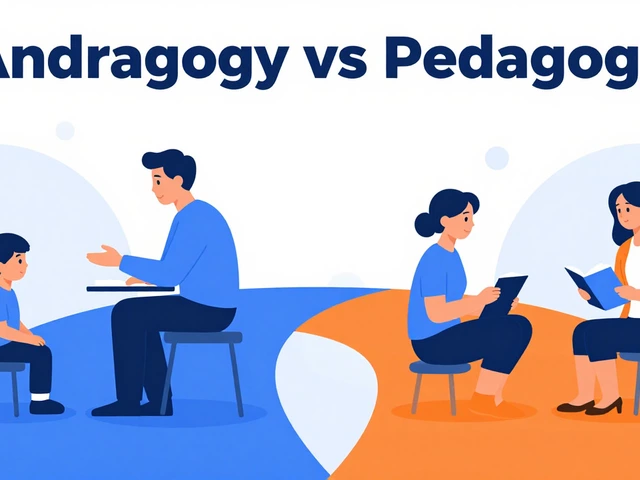
Malcolm Knowles, often called the father of Andragogy (the method and practice of teaching adult learners), identified four core practices that serve as pillars for effective adult learning. These aren’t just theoretical fluff; they are practical frameworks that change how you approach any skill acquisition. Whether you are upskilling for a promotion or learning guitar for fun, ignoring these pillars is why most adult resolutions fail by February.
Self-Directed Learning: Taking the Wheel
The first pillar is Self-Directed Learning. Unlike children who rely on teachers to dictate what, when, and how they learn, adults need autonomy. This doesn’t mean you have to figure everything out alone without help. It means you control the pace, the resources, and the goals.
Think about it this way: would you rather be forced to read a textbook chapter on a Tuesday night, or choose to watch a tutorial because you want to fix a specific bug in your code right now? The latter sticks because you chose it. To apply this, stop waiting for permission or a perfect curriculum. Define your own learning objectives. Ask yourself: "What problem am I trying to solve?" Then, curate your own path. Use podcasts, YouTube, forums, or books-whatever serves your immediate goal. This sense of ownership boosts motivation significantly because you are no longer a passive recipient of information but an active architect of your skills.
Leveraging Prior Experience as a Resource
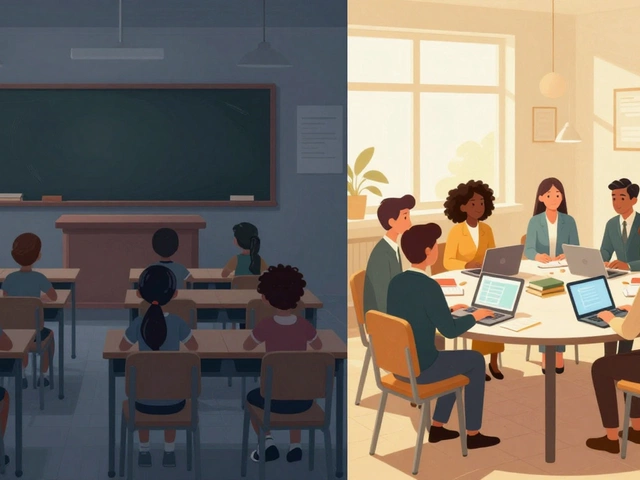
Here is where adult learning diverges sharply from pedagogy (child education). Adults bring a massive reservoir of life and work experience into the room. This is the second pillar: Experience-Based Learning. For children, experience is limited. For adults, it is rich, varied, and sometimes rigid.
The mistake many trainers make-and which you might make with yourself-is treating prior knowledge as noise to be ignored. Instead, use it as a scaffold. When learning something new, anchor it to something you already know. If you are learning project management, compare it to planning a family holiday or organizing a wedding. You already understand logistics, budgeting, and stakeholder communication. By connecting new concepts to existing neural pathways, you reduce cognitive load.
However, experience can also be a barrier. Sometimes we say, "That’s not how we did it at my old job." This rigidity blocks learning. The key here is critical reflection. Don’t just recall past experiences; analyze them. Ask, "Why did that strategy work then, and does it apply here?" This turns passive memory into active learning material.
Readiness to Learn: Timing is Everything
Have you ever tried to learn Excel formulas months before you actually needed them? Probably forgotten them all. That’s because adult readiness to learn is tied to social roles and developmental tasks. This is the third pillar: Situational Readiness.
Adults learn best when the subject matter helps them cope with real-life situations. You don’t learn CPR because a teacher told you to; you learn it because you became a parent, or you joined a sports team where injury risk is high. Your motivation spikes when the learning has immediate utility. To leverage this, time your learning around life events. If you’re moving abroad, that’s the moment to tackle the local language. If you’re getting promoted, that’s the moment to dive into leadership training.
If you find yourself struggling to stay motivated, check the timing. Are you learning this because you think you "should," or because it solves a current pain point? If it’s the former, wait. Or better yet, create a fake deadline or a small project that forces the issue. Make the learning relevant to your current reality, not some hypothetical future.

Problem-Centered Orientation vs. Subject-Centered
Schools teach subjects: History, Math, Science. Adults prefer problems: How do I fix this leak? How do I negotiate a raise? How do I bake sourdough? This shift from subject-centered to Problem-Centered Learning is the fourth pillar.
Children are oriented toward content mastery. Adults are oriented toward application. We want to know how to use the tool, not necessarily the history of the tool’s invention. When designing your learning plan, start with the problem, not the syllabus. Instead of taking a generic "Introduction to Python" course, try building a script that automates your weekly expense report. In the process, you will learn variables, loops, and data types-but you learned them because you needed them to solve a specific problem.
This approach increases retention because the brain files information based on context and utility. You remember the function `sum()` because you used it to calculate your grocery bill, not because it was Chapter 3, Section 2.
| Feature | Pedagogy (Child Learning) | Andragogy (Adult Learning) |
|---|---|---|
| Role of Teacher | Instructor / Authority | Facilitator / Guide |
| Source of Motivation | External (grades, parents) | Internal (self-esteem, quality of life) |
| Orientation to Learning | Subject-centered | Problem-centered |
| Role of Experience | Minimal resource | Rich resource for learning |
| Time Perspective | Application in future | Immediate application |
Putting It All Together: A Real-World Example
Let’s say you want to learn digital marketing. Here is how the four pillars change your approach:
- Self-Directed: You skip the expensive university degree. You decide to focus only on SEO because your blog traffic is low. You choose three reputable blogs and one online community to follow.
- Experience-Based: You realize you’ve been writing emails to clients for years. You connect email copywriting techniques to the persuasive language you already use in sales pitches.
- Readiness: You launch a new product next month. You learn keyword research now because you need to optimize the landing page before launch. The urgency drives the learning.
- Problem-Centered: Instead of reading a book on "The History of Search Engines," you run a campaign. You see which keywords brought traffic. You adjust. You learn by doing, fixing, and repeating.
This method feels less like school and more like working. And that’s exactly why it works for adults. We are wired to solve problems, not memorize facts for their own sake.

Common Pitfalls to Avoid
Even knowing these pillars, adults often stumble. One major trap is perfectionism. We want to master every detail before starting. But in adult learning, progress beats perfection. Start messy. Another trap is isolation. While self-directed, learning shouldn’t be lonely. Engage with communities. Discuss your problems with peers. Social interaction validates your experience and exposes blind spots.
Also, beware of passive consumption. Watching ten hours of tutorials isn’t learning. It’s entertainment. Active engagement-taking notes, practicing, teaching others-is where the magic happens. As the saying goes, "Tell me and I forget. Teach me and I remember. Involve me and I learn."
Frequently Asked Questions
Is self-directed learning harder than traditional classes?
It requires more initial effort to structure and find resources, but it is often more efficient because you skip irrelevant material. Traditional classes offer structure, but adult learners usually benefit more from the flexibility and relevance of self-directed paths.
How do I use my past experience if I'm switching careers completely?
Look for transferable soft skills. Even if the technical content is new, your experience in communication, time management, or handling stress remains valid. Frame new technical challenges through the lens of these established competencies to build confidence and understanding.
What if I don't feel 'ready' to learn a new skill?
Readiness is often triggered by necessity. If you lack intrinsic motivation, try creating a small, low-stakes project that requires the skill. Often, starting the action creates the readiness, rather than readiness preceding the action.
Can these pillars apply to online courses?
Absolutely. Choose courses that allow you to set your own pace (self-directed), include case studies related to real-world issues (problem-centered), and encourage discussion forums (leveraging peer experience).
Who developed the concept of these four pillars?
Malcolm Knowles formalized these concepts in his theory of Andragogy during the 1970s. His work shifted the educational paradigm from teacher-centered instruction to learner-centered facilitation specifically for adults.







Write a comment