
Adult Learning Theory Analyzer
Select a professional scenario below to see which Adult Education Theory applies best, why it works, and how to implement it effectively.
New Hire Onboarding
Employees need to learn company policies immediately but feel overwhelmed by dense manuals.
Leadership Development
Managers need to shift from controlling teams to empowering them, challenging old habits.
Technical Skill Workshop
Staff need to master new software tools through hands-on practice rather than lectures.
Career Pivot Support
Employees want to explore new roles within the company at their own pace using available resources.
Theory Name
ProponentWhy this theory?
Explanation goes here.
Key Principles Applied:
Implementation Strategy
Strategy steps go here.
Ever wonder why the way we teach adults is so different from how we taught kids in school? It’s not just about maturity. It’s about a fundamental shift in how humans process information when they have jobs, families, and bills to pay. This shift is what we call adult education theory. It’s the backbone of everything from corporate training workshops to community college night classes.
If you are designing a course for grown-ups or trying to understand your own learning journey, knowing these theories isn't just academic-it's practical. Without them, you risk boring your audience with irrelevant content or confusing them with child-centric teaching methods. Let’s break down exactly what these theories are, who came up with them, and how you can use them today.
The Core Concept: Andragogy vs. Pedagogy
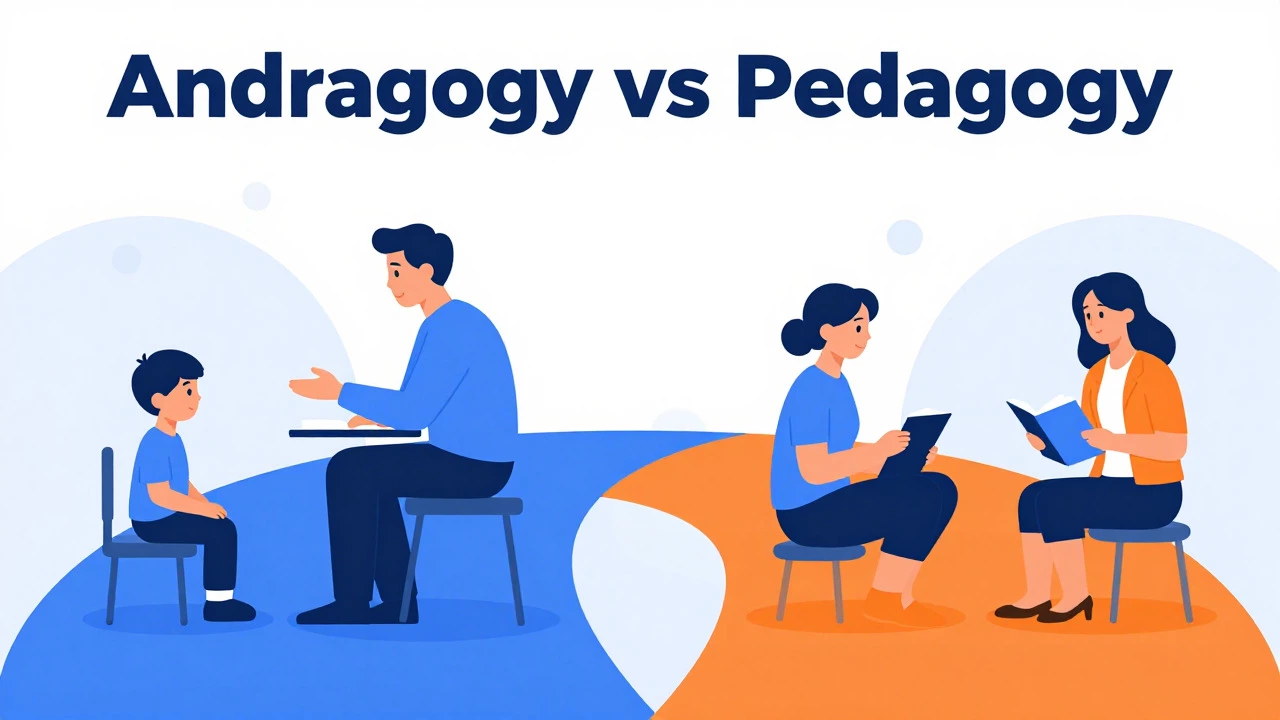
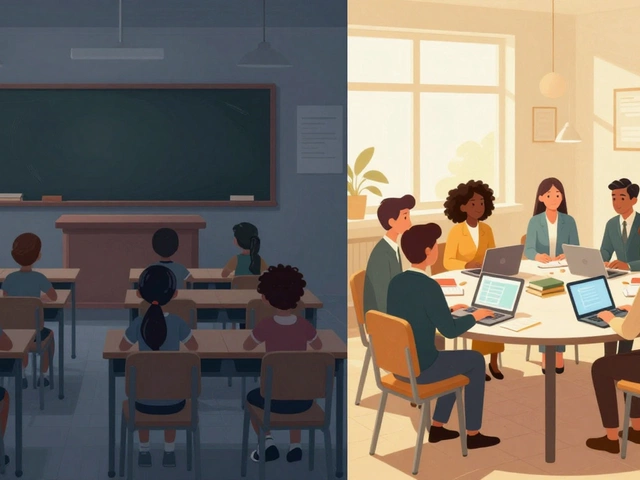
At the heart of adult education theory lies a specific term: Andragogy. Andragogy is the art and science of helping adults learn, distinct from pedagogy (the method of teaching children). While pedagogy assumes the learner is dependent on the teacher for direction, andragogy assumes the learner is self-directed.
This distinction was popularized by Malcolm Knowles, an American educator who argued that adults bring a wealth of life experience to the classroom. They don’t need to be spoon-fed; they need to be facilitated. When you apply andragogy, you stop lecturing and start collaborating. You acknowledge that the adult learner has a different psychological makeup than a child.
For example, a child learns math because the teacher says so. An adult learns accounting because they need to manage their small business finances. The motivation source changes entirely. Understanding this difference is the first step in effective adult instruction.
Knowles’ Six Principles of Adult Learning
Malcolm Knowles didn’t just coin a term; he built a framework. His six principles serve as a checklist for anyone creating educational content for adults. If your program ignores these, it will likely fail to engage its participants.
- The Need to Know: Adults need to understand why they are learning something before they commit to it. If you don’t explain the relevance upfront, they tune out.
- Self-Concept: Adults see themselves as responsible for their own decisions. They resist situations where they feel others are imposing their will on them. Treat them like partners, not subordinates.
- Role of Experience: Adults accumulate a growing reservoir of experience that serves as a rich resource for learning. Use case studies and group discussions to tap into this.
- Readiness to Learn: Adults become ready to learn those things they need to know and be able to do in order to cope effectively with their real-life situations. Timing is everything.
- Orientation to Learning: Unlike children, whose learning orientation is subject-centered, adults are life-centered (or problem-centered). They want solutions to immediate problems, not abstract theories.
- Motivation: While adults respond to some external motivators (better jobs, promotions), the most potent motivators are internal pressures (self-esteem, quality of life).
When you design a workshop, ask yourself: Does this respect their self-concept? Does it solve a real problem? If the answer is no, you’re probably using pedagogy disguised as adult education.
Transformative Learning: Changing Perspectives
While Knowles focused on the process of learning, Jack Mezirow focused on the outcome: transformation. Transformative learning theory suggests that true adult education happens when our frames of reference change. We don’t just add new facts; we rethink how we interpret the world.
Transformative Learning is defined by a process through which we transform our taken-for-granted frames of reference (meaning perspectives, habits of mind, mind-sets) to make them more inclusive, discriminating, open, reflective, and emotionally able to change.
Mezirow identified "disorienting dilemmas" as the catalysts for this change. Think of a major life event-a divorce, a layoff, or a health crisis-that shakes your worldview. In an educational setting, this might look like challenging a deeply held belief through critical reflection. For instance, a manager who believes micromanagement ensures quality might undergo transformative learning after participating in a leadership retreat that exposes the inefficiencies of control-based management.
This theory is crucial for social justice education, diversity training, and any curriculum aimed at deep behavioral change rather than simple skill acquisition.
Experiential Learning: Learning by Doing
You can’t separate adult education from David Kolb’s Experiential Learning Theory (ELT). Kolb argued that learning is a process whereby knowledge is created through the transformation of experience. It’s a cycle, not a linear path.
The cycle consists of four stages:
- Concrete Experience: Actually doing something (e.g., running a marketing campaign).
- Reflective Observation: Reviewing and reflecting on the experience (e.g., analyzing the campaign results).
- Abstract Conceptualization: Concluding and learning from the experience (e.g., developing a new hypothesis about target audiences).
- Active Experimentation: Planning and testing the new idea in future situations (e.g., launching a revised campaign).
Adults often get stuck in one part of this cycle. Some love the doing but hate the reflection. Others love the theory but fear the practice. Effective adult educators help learners move through all four stages. This is why internships, simulations, and role-playing are so powerful in adult contexts-they force engagement with the entire cycle.
Self-Directed Learning: Taking the Wheel
Related to Knowles’ work but distinct in its focus, Self-Directed Learning (SDL) was championed by Allen Tough and later expanded by others. SDL posits that adults take the initiative, with or without the help of others, in diagnosing their learning needs, formulating learning goals, identifying human and material resources for learning, choosing and implementing appropriate learning strategies, and evaluating learning outcomes.
In the modern era, SDL is more relevant than ever. With the rise of online courses and micro-learning platforms, adults are constantly curating their own education. They aren’t waiting for a university syllabus; they are watching YouTube tutorials to fix their cars or taking LinkedIn Learning modules to pivot careers.
For educators, this means shifting from being a "sage on the stage" to a "guide on the side." Your job is to provide the resources and structure, but the learner drives the car. This requires trust and a high degree of autonomy from the participant.
Comparing Major Adult Learning Theories
| Theory | Key Proponent | Core Focus | Best Used For |
|---|---|---|---|
| Andragogy | Malcolm Knowles | Self-direction and experience | Corporate training, professional development |
| Transformative Learning | Jack Mezirow | Changing perspectives and beliefs | Diversity training, leadership coaching, therapy |
| Experiential Learning | David Kolb | Learning through experience cycles | Simulations, internships, hands-on workshops |
| Self-Directed Learning | Allen Tough | Learner autonomy and initiative | Online courses, independent study projects |
Notice how each theory addresses a different aspect of the adult learning experience. You rarely use just one. A comprehensive adult education program might use Andragogy to structure the environment, Experiential Learning for the activities, and Transformative Learning to deepen the impact.
Critical Pedagogy: Education as Liberation
We cannot discuss adult education without mentioning Paulo Freire. His concept of Critical Pedagogy challenges the "banking model" of education, where teachers deposit knowledge into passive students. Instead, Freire advocated for problem-posing education, where teachers and students engage in dialogue to critique and transform their reality.
This theory is heavily used in literacy programs for marginalized communities. It asks: Who benefits from the current system? How does power operate in our lives? By connecting education to political and social action, Freire empowered adults to see themselves as agents of change, not just recipients of information. This approach remains vital in non-formal education settings worldwide.
Applying These Theories in Real Life
So, how do you actually use this? Let’s say you’re designing a cybersecurity training module for office staff.
- Apply Andragogy: Start by explaining why phishing attacks cost companies millions. Respect their intelligence; don’t talk down to them.
- Use Experiential Learning: Send them fake phishing emails and let them click (in a safe sandbox). Then, reflect on what cues they missed.
- Incorporate Self-Directed Learning: Provide a library of resources so they can explore specific threats relevant to their roles.
- Foster Transformation: Encourage them to share stories of past security breaches, changing their mindset from "it won’t happen to me" to "I am the first line of defense."
By weaving these theories together, you create a learning experience that is engaging, relevant, and lasting. You’re not just transferring data; you’re building competence and confidence.
Common Pitfalls to Avoid
Even well-meaning educators fall into traps. One common mistake is assuming all adults learn the same way. Age is not a monolith. A 25-year-old recent graduate has different experiences and motivations than a 60-year-old retiree returning to school. Always assess your audience’s prior knowledge and context.
Another pitfall is over-intellectualizing. Adult learners are busy. They value efficiency. Don’t bury the lead with excessive theoretical background. Get to the application quickly. Remember the "Need to Know" principle-if they don’t see the utility within the first five minutes, you’ve lost them.
Who is the father of adult education theory?
Malcolm Knowles is widely considered the father of adult education theory due to his development of Andragogy in the 1960s and 70s. He shifted the focus from teaching children to facilitating adult learning based on their unique characteristics.
What is the difference between pedagogy and andragogy?
Pedagogy is the method and practice of teaching children, where the teacher directs the learning process. Andragogy is the method and practice of facilitating adult learning, where the learner is self-directed and brings experience to the table.
How does transformative learning differ from traditional learning?
Traditional learning focuses on acquiring new skills or knowledge. Transformative learning, proposed by Jack Mezirow, focuses on changing the learner's underlying assumptions and perspectives, leading to a deeper, more personal shift in how they view the world.
Why is experience important in adult education?
Experience is a primary resource for adult learning. Adults use their past experiences to interpret new information. Ignoring this resource makes learning abstract and less relevant. Leveraging it through discussion and case studies enhances understanding and retention.
Can adult education theories be applied to online learning?
Yes, absolutely. In fact, online learning often aligns well with Self-Directed Learning and Andragogy because it offers flexibility and autonomy. However, designers must intentionally build in opportunities for interaction and reflection to support the social and experiential aspects of adult learning.







Write a comment