
Early Years Development Activity Tracker
How it works: Select an area of learning below to see specific home and school activities. Check off what you've done today to support your child's development.
Select Area of Learning
Welcome
Please select a category from the left to view activities.
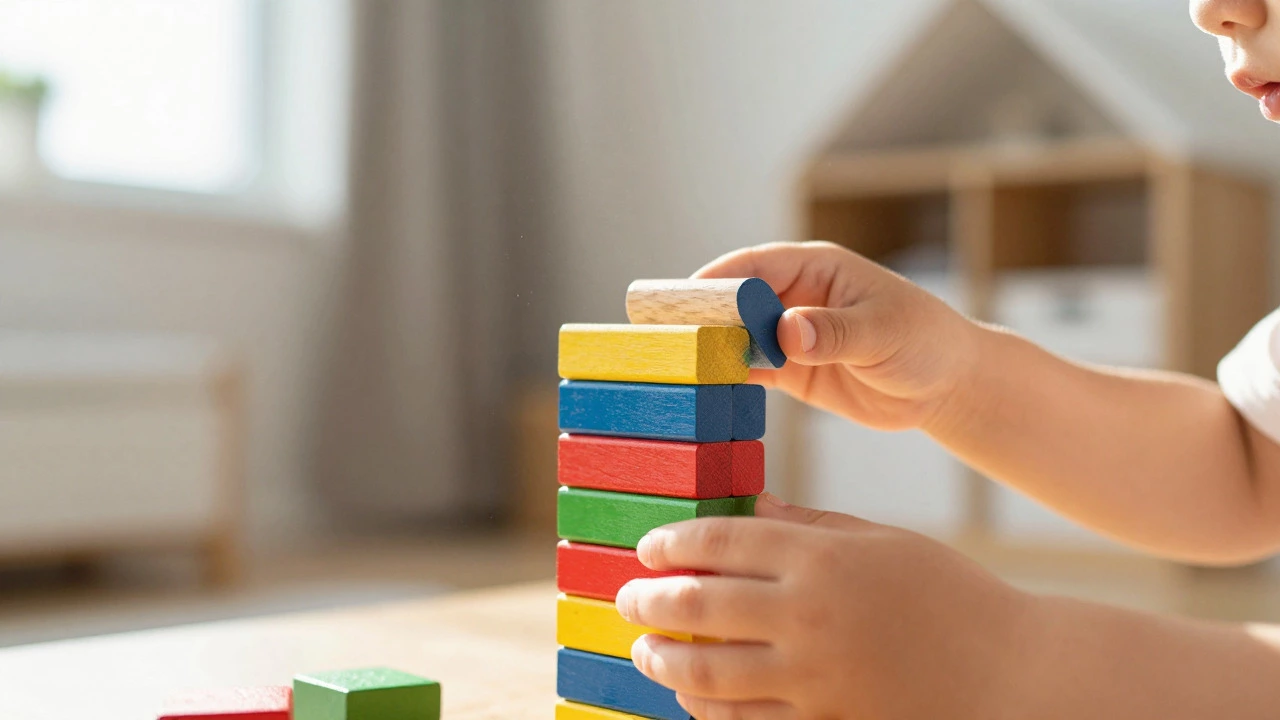
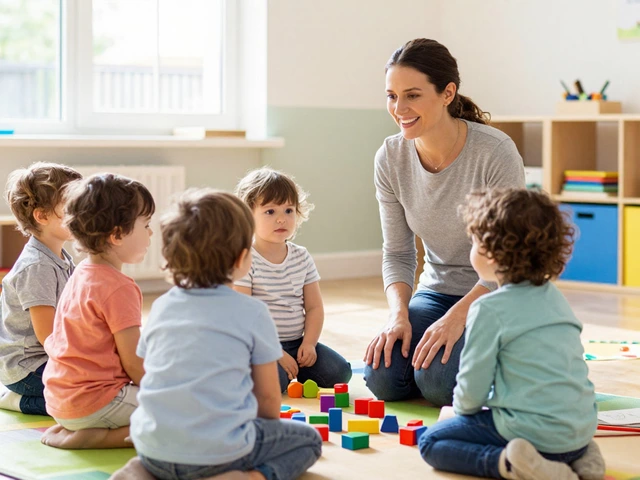
Have you ever watched a three-year-old build a tower of blocks, only for it to collapse, and seen them try again with renewed determination? That moment isn't just play. It’s engineering, physics, resilience, and problem-solving all wrapped into one. This is exactly what the early years curriculum is designed to capture and nurture.
If you’re a parent, a new teacher, or someone considering a career in childcare, you’ve likely heard the term thrown around without much explanation. Is it just coloring books and nap times? Hardly. The early years curriculum is a structured framework that guides how children from birth to five years old learn, grow, and develop. It’s the backbone of high-quality preschool and nursery education.
In this guide, we’ll break down what the early years curriculum actually is, why it matters more than you might think, and how it shapes the foundation for lifelong learning. We’ll look at the specific areas of development it covers, the role of play, and how educators assess progress without turning childhood into a series of tests.
The Core Philosophy: Learning Through Play
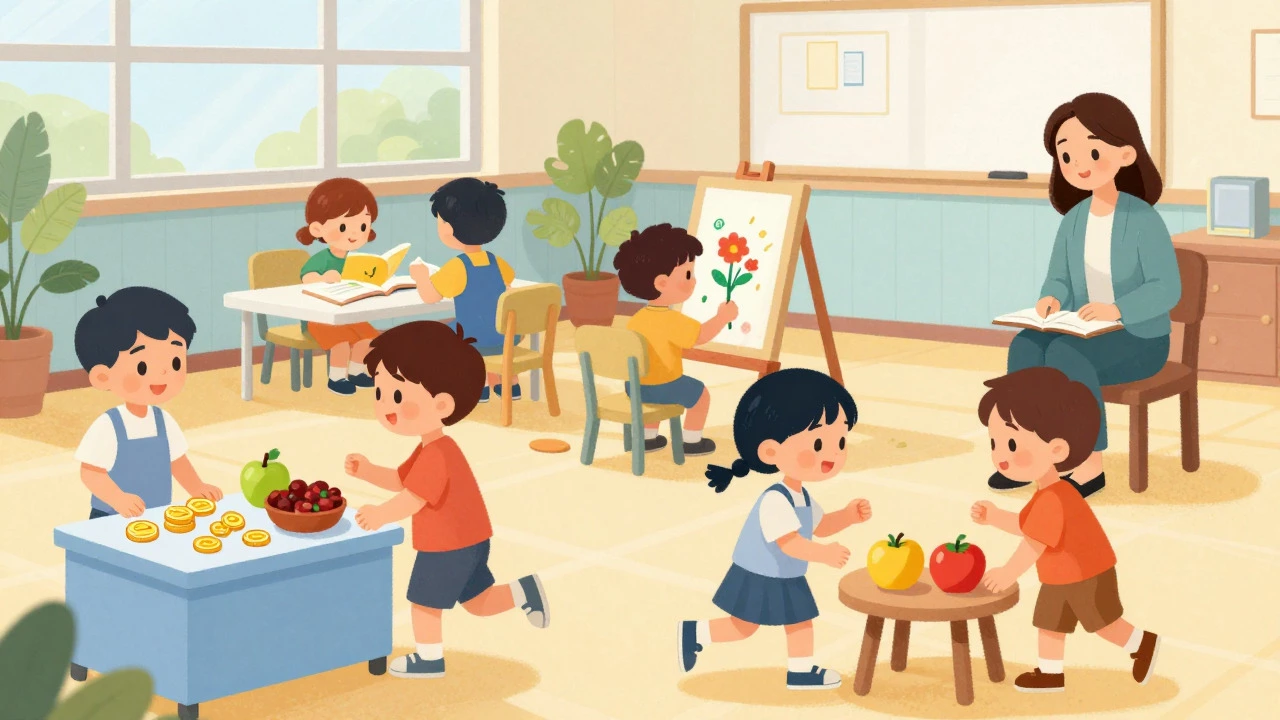
The biggest misconception about early childhood education is that it looks like primary school, just with smaller chairs. In reality, the early years curriculum is built on the belief that play is the primary vehicle for learning. When a child pretends to run a shop, they aren’t just having fun; they are practicing social interaction, basic math (counting coins), language skills, and emotional regulation.
This approach recognizes that young brains are wired differently than adult brains. They learn best through sensory experiences, movement, and exploration rather than sitting still and listening to lectures. The curriculum provides the structure, but the child’s curiosity drives the engine.
For example, a simple trip to the park can be a rich learning experience under this framework. Educators plan activities that encourage children to observe nature, count steps, share equipment, and manage their energy levels. Every interaction is an opportunity to develop key skills.
Understanding the Framework: EYFS and Beyond
While the concept of early years education exists globally, the specific rules and guidelines vary by country. In England, Wales, and Northern Ireland, the standard is the Early Years Foundation Stage (EYFS). Scotland uses a different model called the Curriculum for Excellence (CfE), specifically the "Experiences and Outcomes" for early level. If you are looking at international standards, you might encounter frameworks like the National Quality Standard (NQS) in Australia or Head Start in the United States.
Regardless of the specific name, most modern early years curricula share common pillars:
- Statutory Requirements: Legal guidelines that ensure safety, health, and welfare.
- Developmental Milestones: Expected skills for certain age ranges.
- Assessment Methods: How progress is tracked without formal testing.
Let’s focus primarily on the EYFS, as it is one of the most detailed and widely referenced frameworks. It sets out standards for the learning, development, and care of children from birth to five years old. The goal is to promote children’s learning and development and ensure they are cared for in safe and effective environments.
The Seven Areas of Learning and Development
The heart of the EYFS curriculum is divided into seven distinct areas. These are not separate subjects like Math or History; they are interconnected domains of human development. Educators must cover all seven, but they do so holistically.
These areas are split into two categories: Prime Areas and Specific Areas.
The Prime Areas
The Prime Areas are considered the foundation. They are crucial in the early years because they lay the groundwork for all other learning. Without these, specific skills are harder to acquire.
- Communication and Language: This involves giving children opportunities to experience a rich language environment; to develop their confidence and skills in expressing themselves; and to speak and listen in a range of situations. Think of storytime, singing songs, and encouraging children to talk about their day.
- Physical Development: This includes helping children develop coordination, control, and movement. It also covers understanding the importance of physical activity and making choices about healthy food. From running and jumping to holding a pencil correctly, this area covers both gross motor skills (large movements) and fine motor skills (small movements).
- Personal, Social, and Emotional Development (PSED): This is perhaps the most critical area. It helps children develop a positive sense of themselves and others, form positive relationships, develop respect for others, develop social skills, and learn to manage feelings. It’s about empathy, sharing, and self-regulation.
The Specific Areas
Once the prime areas are established, the Specific Areas build upon them. These are where academic foundations begin to take shape.
- Literacy: Giving children opportunities to develop enjoyment of reading and writing; to link sounds and letters; and to write legibly, fluently, and accurately. This starts long before formal reading, with rhyming games, letter recognition, and storytelling.
- Mathematics: Helping children count numbers, understand and compare numbers, solve problems involving addition and subtraction, and describe shapes and spaces. Counting stairs, sorting toys by color, or recognizing patterns in music are all mathematical activities.
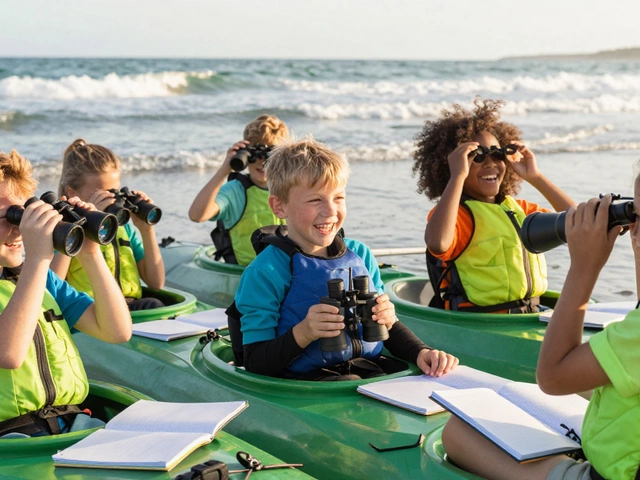
- Understanding the World: Helping children make sense of their physical world and their community. This includes exploring people and communities, technology, and the natural world. Visiting a fire station or planting seeds falls under this category.
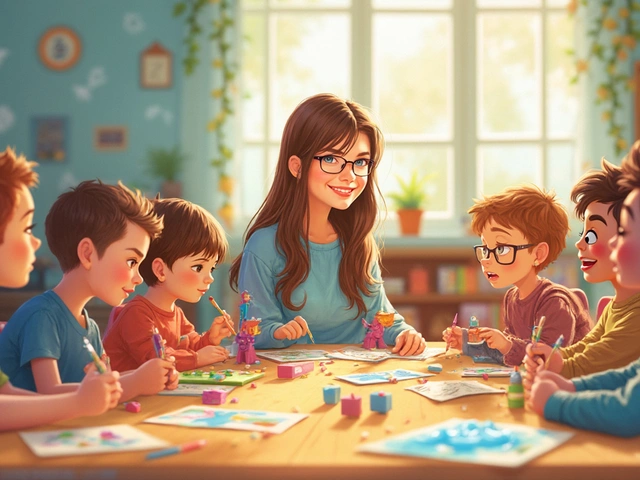
- Expressive Arts and Design: Enabling children to explore and use media and materials, while providing opportunities and encouragement for creativity. Painting, dancing, role-play, and music are key here.
| Area Type | Focus Area | Key Activities & Skills |
|---|---|---|
| Prime | Communication & Language | Listening, speaking, vocabulary building, storytelling |
| Prime | Physical Development | Gross motor (running, climbing), Fine motor (drawing, cutting) |
| Prime | PSED | Emotional regulation, empathy, sharing, independence |
| Specific | Literacy | Phonics, letter recognition, reading comprehension |
| Specific | Mathematics | Counting, shapes, patterns, basic arithmetic |
| Specific | Understanding the World | Nature exploration, community roles, technology basics |
| Specific | Expressive Arts & Design | Creative play, music, art, drama |
The Role of the Educator: Scaffolding and Observation
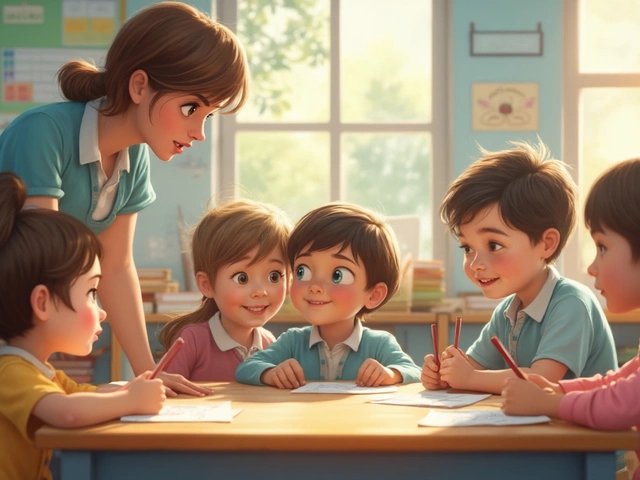
In the early years curriculum, the teacher is not a lecturer standing at the front of the room. Instead, they act as a facilitator and observer. This role is often described using the concept of scaffolding, a term borrowed from architecture. Just as scaffolding supports a building while it’s being constructed, educators support children while they learn new skills, gradually removing the support as the child becomes more independent.
How do educators know if a child is progressing? They don’t give tests. Instead, they rely on continuous observation. Teachers keep detailed records of what children say, do, and create. They might take photos of a child’s drawing, record a conversation, or note how a child solved a puzzle. These observations are then mapped against the expected developmental milestones.
This process allows for personalized learning. If a child struggles with fine motor skills, the educator might introduce more playdough activities or threading beads. If another child shows advanced interest in numbers, they might be given more complex counting games. The curriculum is flexible enough to adapt to individual needs.
Special Educational Needs and Inclusion
A robust early years curriculum is inclusive by design. It recognizes that every child develops at their own pace. Some children may have Special Educational Needs and Disabilities (SEND), such as speech delays, autism spectrum disorder, or physical impairments.
Educators are trained to identify these needs early. The curriculum encourages differentiation, meaning activities are adapted so that every child can participate and succeed. For instance, a child with hearing impairment might benefit from visual cues and sign language during circle time. A child with autism might need a quieter space to regulate their emotions.
Parental involvement is crucial here. Regular communication between home and school ensures that strategies used at home are reinforced at school, and vice versa. This partnership creates a consistent environment that supports the child’s growth.
Why the Early Years Matter: Long-Term Impact
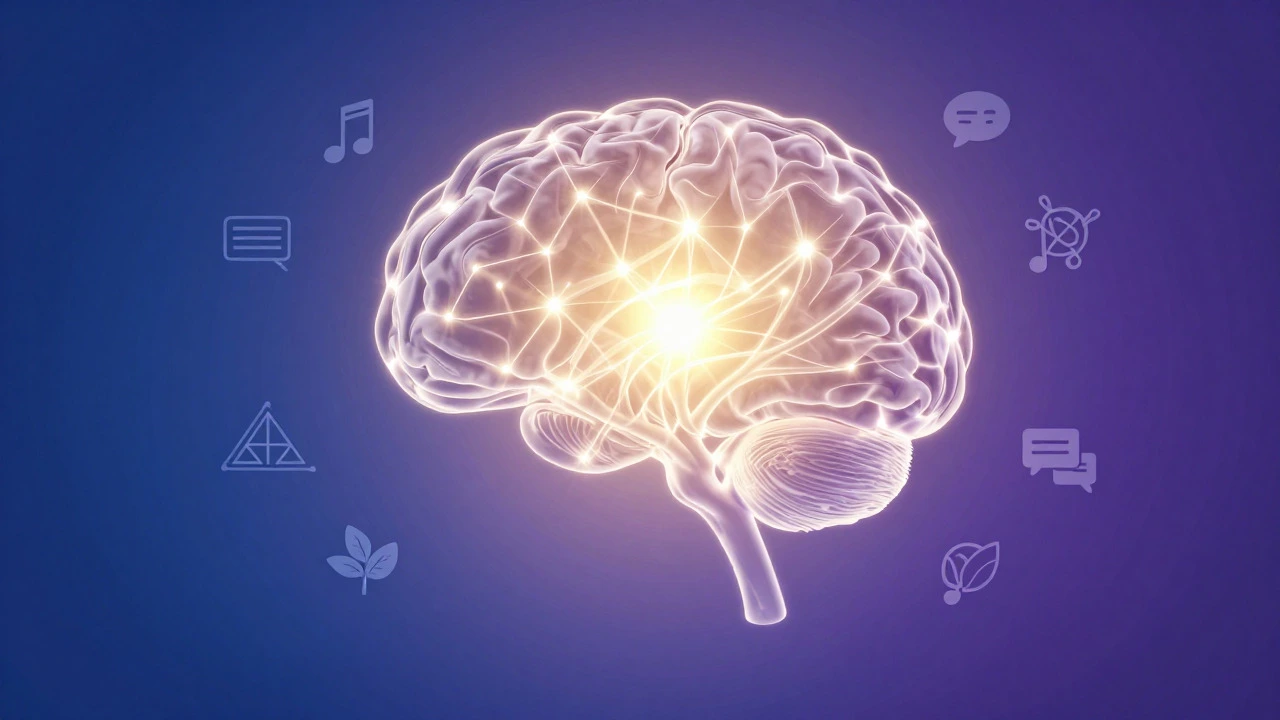
You might wonder why so much effort goes into structuring the first five years of life. The answer lies in neuroscience. Research consistently shows that the brain develops more rapidly in the first five years than at any other time in life. Approximately 90% of brain development occurs before age five.
Children who receive high-quality early education are more likely to:
- Perform better academically in primary school.
- Have better social skills and emotional well-being.
- Stay in education longer and achieve higher qualifications.
- Have better health outcomes and lower rates of criminal behavior later in life.
Investing in the early years curriculum is not just about preparing children for school; it’s about preparing them for life. It builds the cognitive and emotional tools they will need to navigate a complex world.
Practical Tips for Parents and Caregivers
You don’t need to be a qualified teacher to support your child’s early learning. The principles of the early years curriculum can be applied at home. Here are some practical ways to engage with your child’s development:
- Talk More: Narrate your day. Describe what you are cooking, driving, or cleaning. This builds vocabulary and listening skills.
- Read Together: Make reading a daily ritual. Ask questions about the story to encourage comprehension and imagination.
- Encourage Physical Activity: Get outside. Running, climbing, and playing ball help develop coordination and balance.
- Allow Boredom: It’s okay for children to be bored. Boredom sparks creativity. Instead of immediately offering a screen, let them figure out how to entertain themselves.
- Involve Them in Chores: Simple tasks like putting away toys or setting the table teach responsibility and fine motor skills.
Common Misconceptions About Early Years Education
Despite its importance, there are several myths surrounding the early years curriculum. Let’s clear them up.
Myth 1: It’s just babysitting.
Reality: Early years education is highly planned and purposeful. Every activity has a learning objective, even if it looks like play.
Myth 2: Academic pressure should start early.
Reality: Pushing formal academics too early can lead to stress and burnout. The focus should be on foundational skills like curiosity, resilience, and social interaction.
Myth 3: Only disadvantaged children benefit.
Reality: All children benefit from high-quality early education. It enhances social skills, emotional regulation, and cognitive abilities regardless of background.
Looking Ahead: Transition to Primary School
The ultimate goal of the early years curriculum is to prepare children for the transition to primary school. This doesn’t mean teaching them to read and write fluently by age four. It means ensuring they have the underlying skills to succeed in a classroom setting.
Key readiness indicators include:
- Ability to follow instructions.
- Capacity to sit and focus for short periods.
- Social skills to interact with peers and adults.
- Basic self-care skills (using the toilet, dressing).
- Curiosity and willingness to try new things.
Educators work closely with primary schools to ensure a smooth transition. They share observations and insights about each child, allowing teachers to tailor their approach from day one.
What is the difference between EYFS and Key Stage 1?
The Early Years Foundation Stage (EYFS) covers children from birth to five years old, typically ending when they finish Reception class. Key Stage 1 begins at age five and covers Year 1 and Year 2 of primary school. While EYFS focuses heavily on play-based learning and holistic development, Key Stage 1 introduces more formal subject-based learning, though play remains important.
How are children assessed in the early years?
Children are not tested in the traditional sense. Instead, educators use ongoing observation and assessment. They track progress against the Early Learning Goals (ELGs) set out in the EYFS framework. At the end of the Reception year, teachers complete an EYFS Profile, which summarizes the child’s development across the seven areas of learning.
Is the early years curriculum mandatory?
In England, the EYFS is statutory for all registered early years providers, including nurseries, preschools, and reception classes. This means they must adhere to the standards for learning, development, and care. However, homeschooling families are not legally required to follow the EYFS, though many use it as a helpful guide.
What if my child is behind in development?
If educators notice significant delays, they will discuss concerns with parents. They may implement additional support strategies within the classroom. In some cases, they might refer the child to external specialists, such as speech and language therapists or educational psychologists, for further assessment and support.
How can I support my child’s learning at home?
You can support your child by engaging in everyday activities that align with the seven areas of learning. Talk frequently, read together, encourage physical play, and involve them in household tasks. Create a safe and stimulating environment where they can explore and ask questions. Consistency and positive reinforcement are key.


Write a comment