
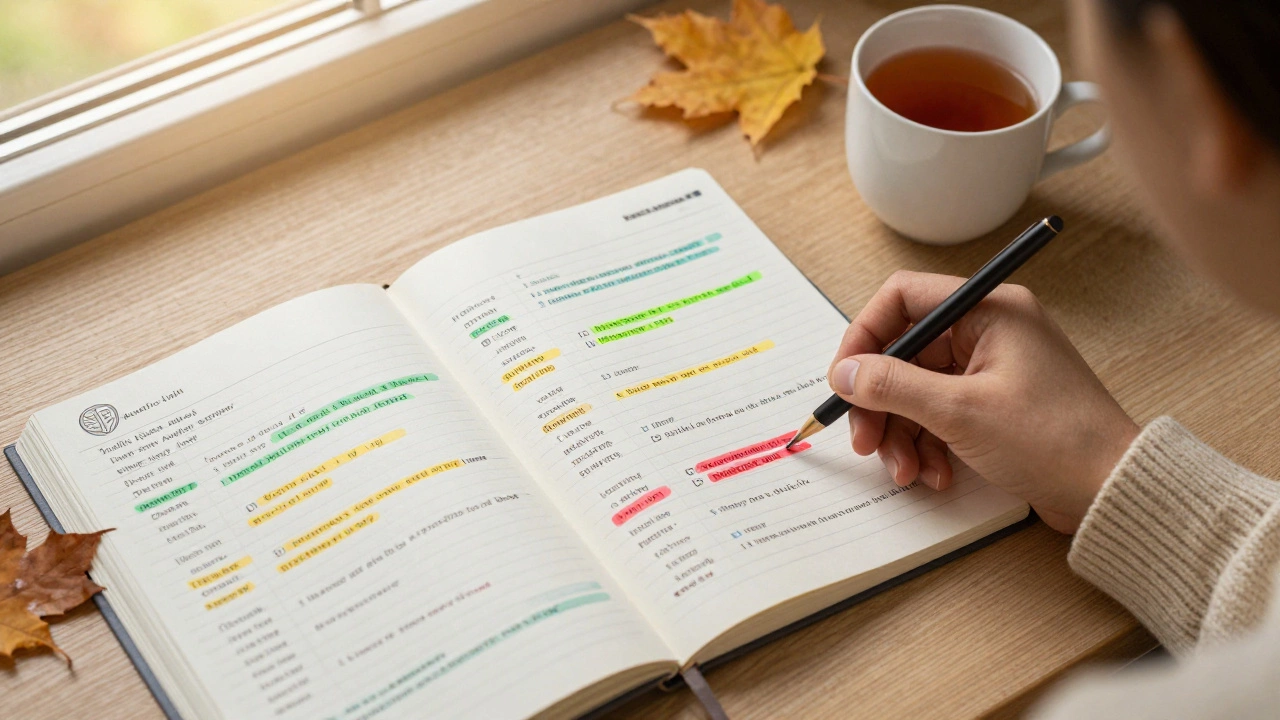
GCSE Revision Strategy Planner
How to use: Select the current month to see which Revision Phase you should be in and which High-Impact Techniques you should prioritize right now.
Phase Name
Description goes here.
🚀 Recommended Techniques:
Select your current timeline above to generate your personalized strategy.
Key Takeaways for Your Study Timeline
- Early Phase (Autumn): Focus on filling knowledge gaps and organizing notes.
- Mid Phase (Winter/Spring): Move from reading to active testing.
- Final Phase (April/May): Prioritize past papers and timed conditions.
- The Golden Rule: Consistency beats intensity every single time.
The Danger of the 'Cramming' Myth
Many students think they work better under pressure. While the adrenaline rush of a deadline can make you feel productive, Cramming is a study method where large amounts of information are attempted to be learned in a very short period. This is biologically inefficient. Your brain needs time to move information from short-term memory to long-term memory through a process called consolidation.
If you start your GCSE revision in May, you're essentially trying to build a house by piling all the bricks on top of each other without any mortar. The information just doesn't stick. Instead, you want to use Spaced Repetition, which is the technique of reviewing information at increasing intervals to improve long-term retention. By starting early, you can review a topic in October, again in December, and once more in March, making the knowledge permanent.
Phase 1: The Autumn Foundation (September to December)
You don't need to spend three hours a night studying in October. In fact, doing that is a fast track to burnout. The goal for the first term is organization and gap analysis. You can't revise what you don't have. Use this time to ensure your folders are up to date and your notes are legible. If you missed a week of Biology because you were sick in Year 10, now is the time to find those missing handouts.
Try a simple audit. Go through your exam specification-the actual list of everything the exam board expects you to know-and use a traffic light system. Mark topics in green (I get this), amber (I sort of get this), and red (I have no idea what this is). This prevents you from wasting time on things you already know and forces you to tackle the scary stuff while you still have plenty of time.
Phase 2: The Winter Push (January to March)
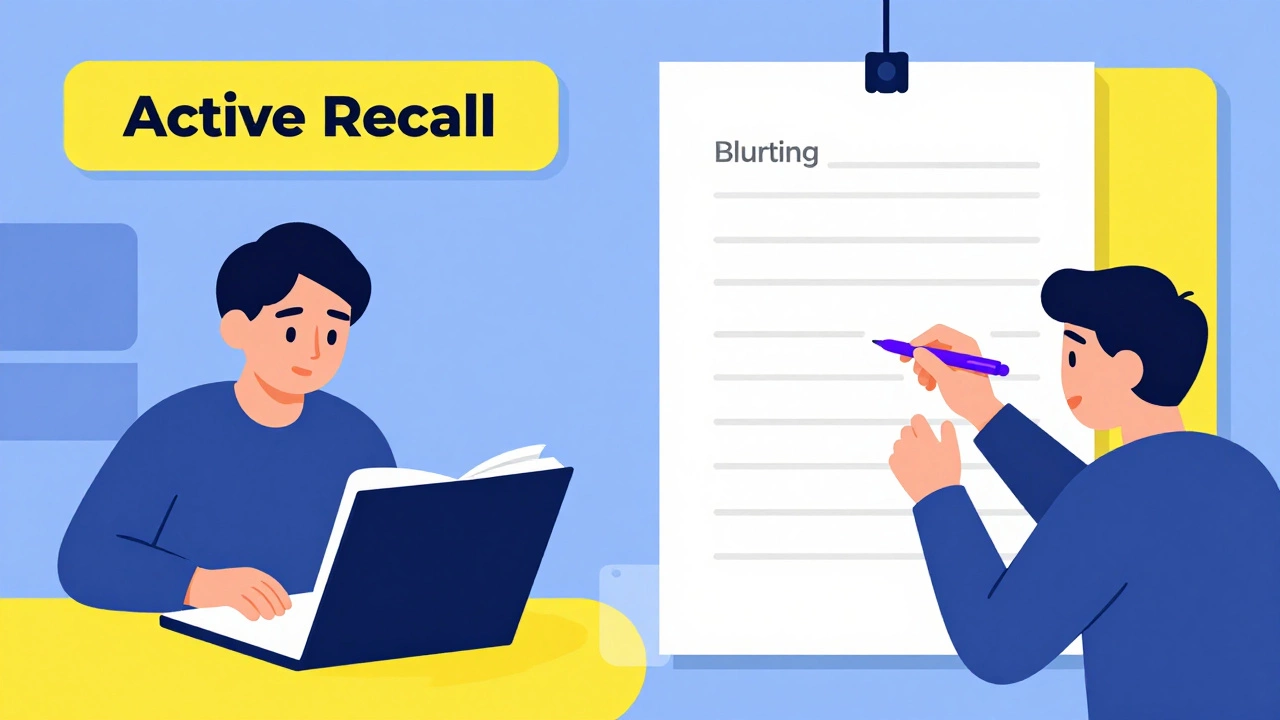
Once the holiday slump wears off, the intensity needs to pick up. This is where you transition from passive learning to Active Recall. Active recall is the process of challenging your mind to retrieve information, rather than just reviewing it. Reading your notes is passive; testing yourself is active.
Instead of highlighting a textbook, use flashcards or blurting. Blurting is a simple but powerful technique: read a page of your notes, close the book, and write down everything you can remember on a blank sheet of paper in a different colored pen. Then, open the book and fill in what you missed. This tells your brain exactly where the holes in your knowledge are.
| Technique | Effort Level | Effectiveness | Best Used When |
|---|---|---|---|
| Reading Notes | Low | Low | Initial review only |
| Flashcards | Medium | High | Daily maintenance |
| Past Papers | High | Very High | Final 3 months |
| Mind Mapping | Medium | Medium | Connecting complex ideas |
Phase 3: The Final Sprint (April to Exam Day)
By April, you should stop focusing on "learning" and start focusing on "examining." There is a massive difference between knowing the content and knowing how to answer a GCSE Exam Board (like AQA or Edexcel) question. You can be an expert in the French Revolution, but if you don't follow the specific structure the examiner wants, you'll lose marks.
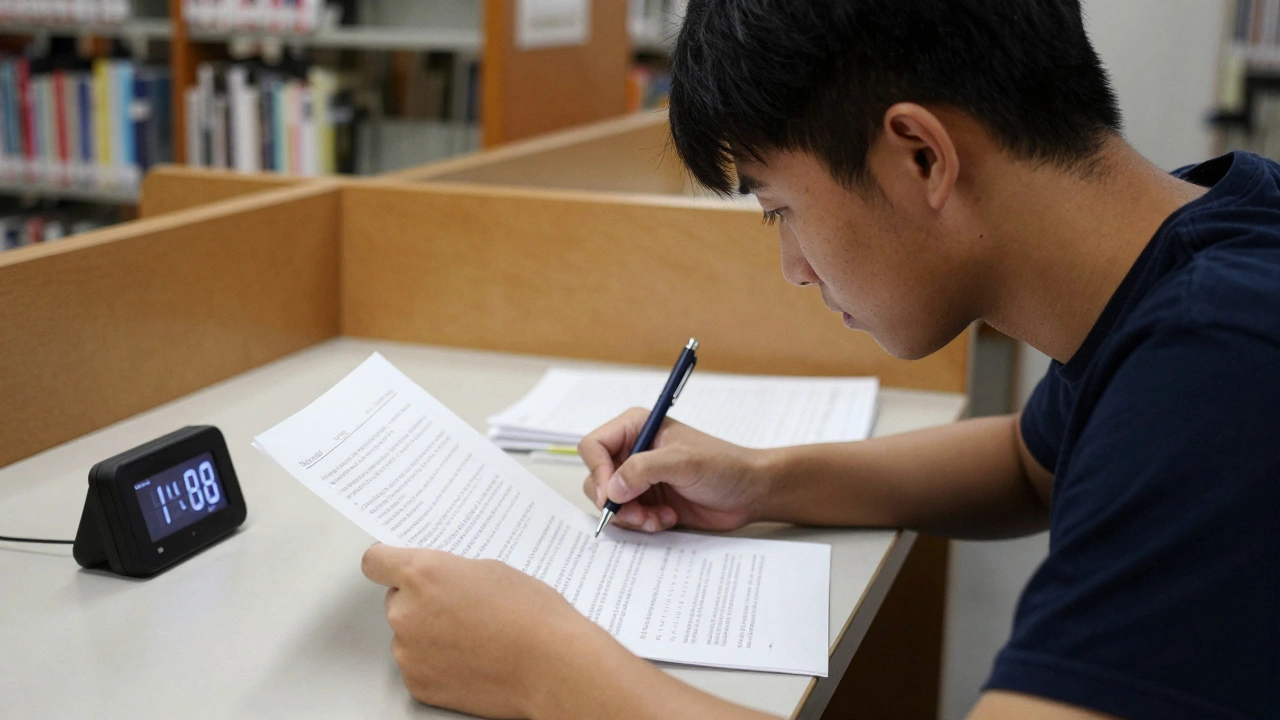
This is the time for Past Papers. These are previous years' actual exam questions used for practice. Do them under timed conditions. Turn off your phone, set a timer, and sit in a quiet room. The psychological stress of the clock is part of the training. If you only do questions in your bedroom with your notes open, you'll freeze when you're in the hall and realize you can't find the answer in your head.
Dealing with Burnout and Mental Blocks
If you start too early and go too hard, you'll hit a wall in March. To avoid this, build "non-negotiables" into your schedule. This might be a Tuesday night football match, a gaming session with friends, or an hour of reading. If you treat your brain like a muscle, you know it needs recovery time to grow. If you just push and push, you'll experience a drop in cognitive function.
When you feel a mental block, change your environment. If you've been staring at your desk for four hours, move to the kitchen table or a local library. Sometimes a change of scenery triggers a fresh perspective on a difficult concept, like a complex Physics equation or a tricky English poem analysis.
The Role of the Study Timetable
A rigid timetable that says "Biology from 4 PM to 5 PM" usually fails because life happens. You might have a sudden project for school or just a terrible day. Instead, use a priority list. List the three most important topics you need to cover today. If you only get one done, that's still a win. If you get all three done, you're ahead of schedule.
Focus on "interleaving." This means mixing up your subjects. Instead of doing five hours of Maths on Monday and five hours of English on Tuesday, try two hours of Maths, then one hour of History, then an hour of Science. This forces your brain to jump between different types of thinking, which is exactly what happens on exam day when you move from one paper to another.
Is it too late to start revising if it's already March?
No, it is not too late, but you need to change your strategy. Stop spending time making pretty notes or reading textbooks. Move immediately to 'high-yield' activities: past papers and active recall. Focus only on the 'red' topics from your audit-the ones you struggle with most-and use mark schemes to learn exactly what examiners are looking for.
How many hours a day should I revise?
Quality is better than quantity. Two hours of focused, phone-free study is worth more than eight hours of 'pseudo-studying' where you're scrolling social media every ten minutes. During the autumn and winter, 1-2 hours a day is plenty. In the final few weeks, you can increase this, but make sure you're taking frequent breaks using the Pomodoro technique (25 minutes work, 5 minutes break).
Should I prioritize my favorite subjects or my hardest ones?
It's tempting to study what you're good at because it feels rewarding. However, the biggest grade jumps happen when you turn a '4' into a '6' in a hard subject, rather than turning an '8' into a '9' in an easy one. Use the 80/20 rule: spend 80% of your time on the topics that challenge you and 20% on maintaining your strengths.
Do I need a tutor to get top grades?
Tutors can provide great structure and personalized feedback, but they aren't a requirement. Many students achieve top marks using free online resources, exam board videos, and disciplined self-study. The key is whether you have the discipline to follow a plan and the honesty to admit when you don't understand a concept.
What is the best way to memorize large amounts of content?
Avoid re-reading. Use a combination of flashcards (like Anki or Quizlet) for factual data and mind maps for conceptual connections. If you can explain a topic to a friend or a family member who knows nothing about it, you've likely mastered the material. This is known as the Feynman Technique.
Next Steps for Every Student
If you're feeling overwhelmed, start with one small action today. Don't try to build a perfect three-month calendar in one sitting. Instead, spend 30 minutes doing a 'gap analysis' for one subject. Identify three things you don't understand and find one video or textbook chapter that explains them. Once you've had a small win, the momentum will carry you forward. The best time to start was months ago; the second best time is right now.









Write a comment