

Learning Environment Fit Calculator
Use this tool to determine which learning modality suits your needs best. Adjust the sliders to reflect your current situation and see how different factors impact your potential success rate.
Your Learning Profile
Key Insights:
- • Adjust sliders to see personalized advice.
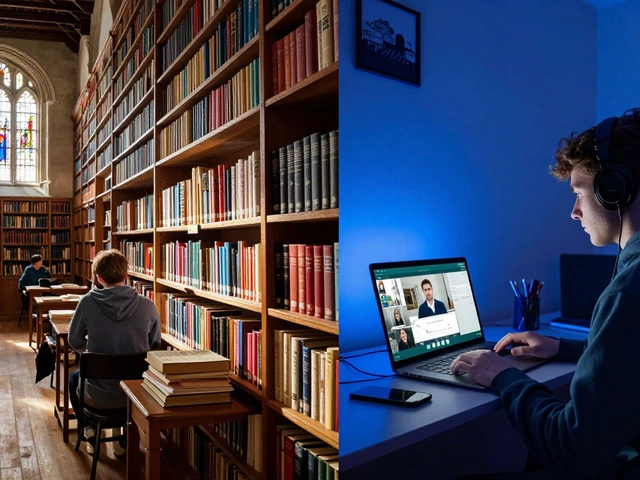
You’ve probably heard the hype: online learning is the future. It’s flexible, it’s cheap, and you can wear pajamas while getting a degree. But here’s the thing nobody tells you in the marketing brochures-humans are weirdly bad at staring at screens for six hours straight without their brains turning to mush. If you’re wondering why so many students and professionals still fight tooth and nail for a seat in a physical classroom, it’s not just nostalgia. There are hard, psychological, and practical reasons why sitting in a room with other people beats logging into Zoom every single time.
This isn’t about hating on technology. I use video calls daily. But when it comes to deep learning, skill acquisition, and actually retaining information, the traditional model holds up surprisingly well. Let’s break down exactly where in-person education wins, using real-world logic rather than academic fluff.
The Social Battery Isn’t Just a Metaphor
Learning is rarely a solitary act. Even if you’re reading a textbook alone, your understanding is shaped by discussions, debates, and the energy of those around you. When you switch to fully remote setups, you lose what sociologists call "co-presence." This is the subtle, unspoken awareness that others are there with you, working through the same struggle.
In a physical classroom, this creates a feedback loop. You see someone frown, and you realize the concept was confusing. You see someone nod, and you gain confidence. Online, these micro-interactions vanish. You’re left guessing. Are they bored? Did they understand? Or are they checking emails? This ambiguity drains mental energy. You spend cognitive resources trying to interpret silence instead of processing new information.
Think about a study group. In person, you might start arguing about a historical event, which leads to a tangent about economics, which somehow helps you remember a date. That serendipity is rare on Slack or Discord. The friction of typing and waiting for responses kills the spontaneous flow of ideas. You end up with structured Q&A sessions rather than organic learning moments.
Non-Verbal Cues Do Heavy Lifting
Communication is largely non-verbal. Research often cites that over half of our message is conveyed through body language and tone. When you’re in a lecture hall, the professor doesn’t just speak; they gesture, they pause, they walk closer to the side of the room where students look confused. They read the room.
On a webcam, everyone looks like a floating head against a messy background. The instructor can’t see if the back row is asleep. The student can’t tell if the teacher’s sigh means frustration with the class or just fatigue from grading papers. This loss of context leads to misunderstandings. You might think a teacher is rushing because they don’t care, when they’re actually pressed for time due to an external constraint. In person, you’d sense the urgency and adapt. Online, you just feel ignored.
Moreover, eye contact matters. It’s primal. When someone looks at you while explaining a complex idea, it triggers a biological response that heightens attention. Video conferencing tools try to fake this with "speaker view," but it’s never quite right. You’re looking at a screen, not eyes. Your brain knows the difference, even if you don’t consciously notice it until you’re exhausted after a day of virtual meetings.
Focus Is Easier When You Can’t Tab Away
Let’s be honest: multitasking is a myth. When you attend a class in person, you’re physically committed. You can’t easily open Instagram, check sports scores, or start folding laundry. The environment demands your presence. This external structure acts as a guardrail for your attention span.
Online, the temptation is constant. Your browser has forty tabs open. Your phone buzzes next to your keyboard. No one sees you scrolling. Studies on student performance consistently show that students who engage in "media multitasking" during lectures retain significantly less information than those who don’t. Without the social pressure of being watched by peers and instructors, self-discipline becomes the only barrier between you and distraction. And let’s face it-willpower is a finite resource.
- Environmental Control: Physical classrooms are designed for focus. Lighting, seating arrangements, and noise levels are managed to reduce distractions.
- Social Accountability: Seeing peers take notes motivates you to do the same. It’s a subtle peer-pressure effect that boosts productivity.
- Routine Building: Commuting to campus forces a routine. Leaving home signals to your brain that it’s time to work, creating a psychological boundary between rest and effort.

Hands-On Skills Need Hands-On Practice
Some things just don’t translate well to a screen. Try teaching someone how to suture a wound via Zoom. Or watch them mix chemicals in a lab. Sure, you can demonstrate techniques, but you can’t correct their grip, adjust their posture, or smell if something’s going wrong. For fields like nursing, engineering, art, or culinary arts, tactile feedback is essential.
In-person training allows for immediate, physical correction. An instructor can gently move a student’s hand to show the right angle for a brushstroke. They can spot a safety hazard before it becomes an accident. Online simulations are improving, but they lack the resistance, texture, and unpredictability of real materials. A digital clay model doesn’t dry out. A virtual engine doesn’t leak oil. These sensory details anchor memory and skill development in ways pixels simply can’t match.
| Subject Area | In-Person Effectiveness | Online Effectiveness | Key Limitation of Online |
|---|---|---|---|
| Theoretical Humanities (History, Lit) | High | High | Lack of spontaneous debate dynamics |
| STEM Labs (Chemistry, Biology) | Very High | Low | No tactile feedback or safety supervision |
| Performing Arts (Drama, Music) | Essential | Moderate | Audio lag disrupts timing and ensemble play |
| Soft Skills (Negotiation, Leadership) | High | Moderate | Harder to read nuanced emotional cues |
Networking Happens in the Margins
Careers are built on relationships. While LinkedIn is great for maintaining contacts, it’s terrible for making new ones. The most valuable connections often happen in the awkward gaps: waiting for the bus, chatting in the cafeteria, or lingering after class to ask a question. These informal interactions humanize your peers and professors.
Online networking feels transactional. You join a forum, post a question, get an answer, and leave. There’s little opportunity for the slow-burn rapport that turns a classmate into a business partner. In Dublin, for instance, many tech startups were founded by students who met in university pubs, not in chat rooms. The shared experience of struggling through a difficult module creates a bond that’s hard to replicate digitally. You’ve suffered together. That’s powerful glue.
Mental Health and Structure
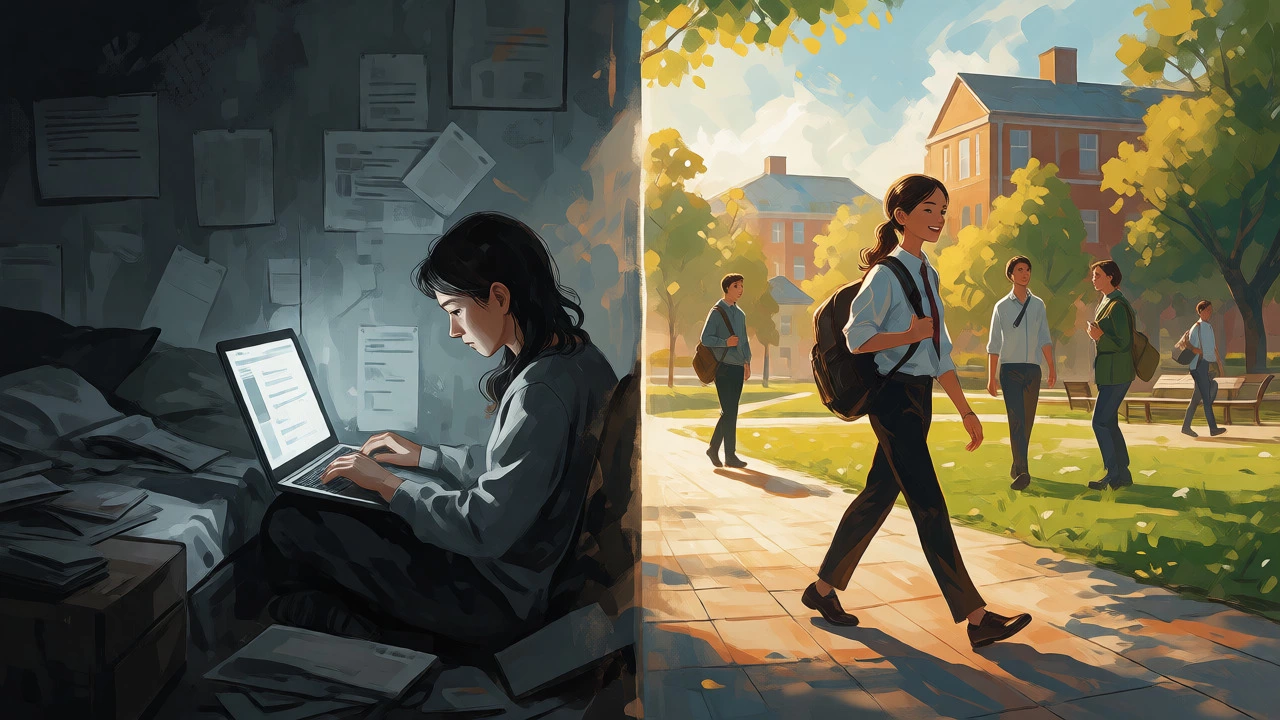
Isolation is a silent killer in distance learning. Humans are social animals. We need regular, low-stakes interaction to maintain mental health. Online courses can feel lonely, especially for introverts who thrive on structured socializing rather than forced small talk. The lack of a clear boundary between "home" and "school" also blurs lines, leading to burnout. When your office is your bedroom, you never really clock off.
Physical campuses provide a third place-a space that isn’t work or home. It’s a dedicated zone for growth and community. Having to dress up, commute, and sit among others reinforces a professional identity. It helps separate your personal stressors from your academic goals. Many students report higher satisfaction and lower anxiety rates when they have a physical routine, even if it involves traffic or rain.
When Online Still Wins
To be fair, online learning isn’t always worse. It shines when flexibility is the priority. If you’re working full-time, have young kids, or live in a rural area far from universities, online options are a lifeline. It democratizes access. But recognizing its limits is key. It’s a tool for access, not necessarily for depth. The best approach often blends both: use online modules for theory and reserve in-person time for labs, seminars, and networking.
Does in-person learning lead to better grades?
Generally, yes, particularly for younger students and hands-on subjects. The structured environment reduces procrastination and increases accountability. However, highly motivated adult learners may perform equally well online if they have strong self-discipline and a quiet workspace.
Can online courses replace university degrees entirely?
Not yet for most professions. Employers still value the networking and soft skills developed through campus life. Hybrid models are becoming more common, allowing students to complete theoretical work online while attending campus for critical practical assessments and social integration.
Why do I feel tired after online classes?
This is known as "Zoom fatigue." Processing non-verbal cues over video requires extra cognitive effort. Additionally, the lack of physical movement and breaks between sessions contributes to mental exhaustion. In-person classes naturally include transitions and movement that help reset attention.
Is online learning better for introverts?
It depends. Introverts may appreciate the ability to participate via text chat rather than speaking up in class. However, they often miss the low-energy social bonding that occurs in physical spaces. Some find online isolation draining, while others prefer the control over their environment.
How can I make online learning more effective?
Create a dedicated workspace away from distractions. Treat class times as appointments you cannot miss. Engage actively by asking questions early. Join virtual study groups to simulate social accountability. Take regular breaks away from the screen to prevent fatigue.




Write a comment