

Special Needs Support & Identification Tool
Select a category above to see specific signs, tools, and professional resources.
Walking into a classroom or a pediatrician's office, you might hear the term "special needs" thrown around as if it’s a single box. But inside that box is a vast, complex world of different experiences. When parents and educators ask about the four major types of special needs in children, they are usually looking for a framework to understand how these conditions affect learning, behavior, and daily life. While there are dozens of specific diagnoses, experts generally group them into four broad categories: Learning Disabilities, conditions that affect how a child processes information despite having average or above-average intelligence, Developmental Disorders, conditions like autism that impact social interaction and communication, Physical Disabilities, conditions affecting mobility, coordination, or physical function, and Emotional or Behavioral Disorders, conditions that significantly impact a child's ability to interact socially and learn emotionally.
Knowing which category a child falls into isn't just about labeling; it’s about unlocking the right support. A child with dyslexia needs different tools than a child with cerebral palsy. Let’s break down these four pillars so you can spot the signs, understand the challenges, and know where to look for help.
1. Learning Disabilities: The Invisible Barrier
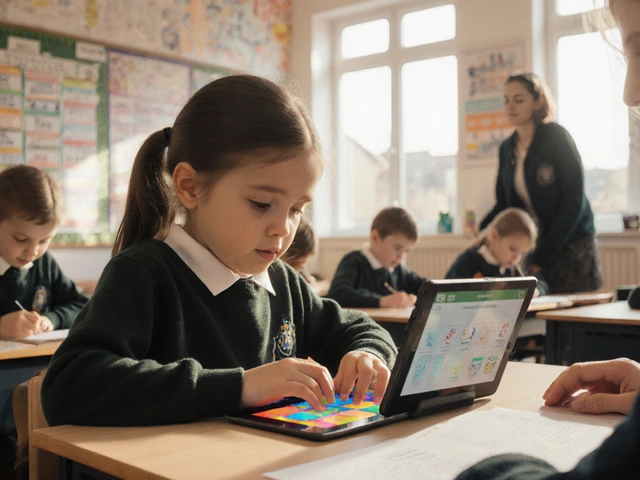
Learning disabilities are perhaps the most common type of special need, yet they are also the most misunderstood. Unlike physical injuries, you can’t see them. A child with a learning disability often has normal or even high intelligence but struggles specifically with processing certain types of information. The brain receives, processes, stores, and responds to information differently than expected.
The most well-known example is Dyslexia, a condition characterized by difficulty reading due to problems identifying speech sounds and learning how they relate to letters and words. Then there is Dyscalculia, a challenge with understanding numbers and math concepts, and Dysgraphia, a difficulty with writing and fine motor skills related to handwriting.
What does this look like in real life? Imagine a ten-year-old who can hold a deep conversation about dinosaurs but cannot read a simple paragraph on the page. Or a student who understands algebraic concepts verbally but freezes when asked to write out the steps. These children aren’t lazy. Their brains are wired differently. The key here is that intelligence is not the issue; access to information is.
- Signs to watch for: Trouble rhyming, confusing similar-looking letters (b/d), slow reading speed, or avoiding writing tasks.
- Support strategies: Multisensory teaching methods, audiobooks, speech-to-text software, and extra time for tests.
2. Developmental Disorders: Navigating Social and Communication Worlds
Developmental disorders affect how a child grows and learns to interact with the world around them. This category is broad, but it primarily includes conditions that impact social skills, communication, and behavior patterns. The most prominent condition here is Autism Spectrum Disorder (ASD), a developmental disorder characterized by challenges with social skills, repetitive behaviors, speech, and nonverbal communication.
Another critical part of this category is Attention Deficit Hyperactivity Disorder (ADHD), a neurodevelopmental disorder characterized by persistent patterns of inattention and/or hyperactivity-impulsivity. While ADHD is sometimes categorized separately under behavioral issues, it is fundamentally a developmental difference in executive function-the brain's management system.
Children with ASD might struggle to understand sarcasm, maintain eye contact, or navigate the unwritten rules of playground socializing. They may have intense interests in specific topics, like train schedules or space facts, which can be a source of both joy and isolation. For those with ADHD, the challenge is often regulation. It’s hard to sit still, wait your turn, or remember multi-step instructions because the brain’s filter for distractions is wide open.
The goal of support here isn’t to “cure” the child but to build bridges. Social stories, visual schedules, and structured environments help these children predict what comes next, reducing anxiety and helping them thrive.
3. Physical Disabilities: Mobility and Coordination Challenges
This category covers conditions that affect a child’s physical movement, coordination, or stamina. These disabilities can be congenital (present at birth) or acquired later through injury or illness. Common examples include Cerebral Palsy (CP), a group of disorders that affect movement, muscle tone, or posture caused by damage that occurs to the immature, developing brain, Spina Bifida, a birth defect where the spine and spinal cord don't form properly, and muscular dystrophies.
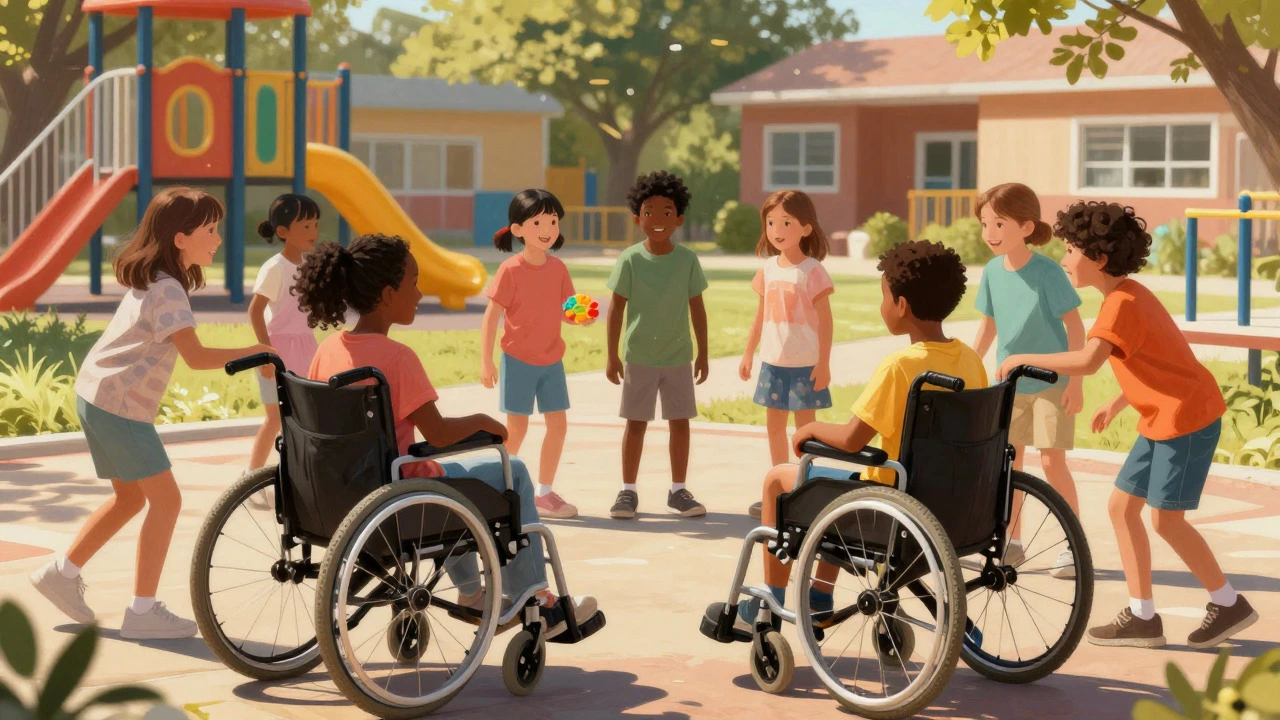
For a child with CP, the challenge might be getting from their desk to the bathroom independently. For a child with juvenile arthritis, it might be holding a pencil without pain. These physical barriers can lead to secondary emotional issues if the environment isn’t adapted. If a classroom isn’t accessible, the child becomes isolated not because of their mind, but because of their body.
Modern assistive technology has revolutionized this area. Wheelchairs, voice-activated computers, and adaptive seating allow children with physical disabilities to participate fully in school and play. The focus here is on accessibility and independence. When you remove the physical barriers, you often unlock the child’s full academic potential.
4. Emotional and Behavioral Disorders: The Inner Storm
Sometimes the biggest barrier to learning is internal. Emotional and behavioral disorders involve difficulties in regulating emotions, interacting with others, or controlling impulses. This category includes conditions like Anxiety Disorders, excessive fear or worry that interferes with daily activities, Depression, persistent sadness or loss of interest in activities, and Oppositional Defiant Disorder (ODD), a pattern of angry/irritable mood, argumentative/defiant behavior, or vindictiveness.
A child with severe anxiety might freeze during a test, not because they don’t know the material, but because their heart is racing and their mind is blank. A child with ODD might seem defiant, but often their behavior is a response to feeling overwhelmed or misunderstood. These needs require a compassionate approach that addresses the root cause, not just the symptom.
Support often involves a combination of therapy, counseling, and environmental adjustments. Quiet spaces for decompression, clear and consistent routines, and positive reinforcement systems are crucial. Teachers play a huge role here, acting as stabilizers in a child’s day.
Comparison of Support Needs Across Categories
| Category | Primary Challenge | Common Tools & Strategies | Professional Support |
|---|---|---|---|
| Learning Disabilities | Processing information (reading/math/writing) | Audiobooks, speech-to-text, multisensory instruction | Special Ed Teacher, Speech Therapist |
| Developmental Disorders | Social interaction, attention, regulation | Visual schedules, social stories, fidget tools | Behavioral Analyst, Psychologist |
| Physical Disabilities | Mobility, coordination, access | Wheelchairs, adaptive tech, accessible classrooms | Occupational Therapist, Physiotherapist |
| Emotional/Behavioral | Emotion regulation, impulse control | Counseling, quiet zones, positive reinforcement | Child Psychologist, Counselor |

Navigating the Diagnosis Process
If you suspect your child has special needs, the path forward can feel overwhelming. In Ireland, the process typically starts with your GP or pediatrician. They may refer you to a specialist team. Early intervention is critical, especially for developmental and physical needs.
For learning disabilities, schools often conduct initial screenings. If concerns persist, a comprehensive evaluation by an educational psychologist is needed. This evaluation determines eligibility for an Individualized Education Program (IEP) or a Statement of Special Educational Needs. Don’t be afraid to advocate. You know your child better than anyone else. Keep records of observations, note specific incidents, and communicate clearly with teachers.
Frequently Asked Questions
Can a child have more than one type of special need?
Yes, this is called co-occurrence or comorbidity. For example, a child might have Autism (developmental) and Dyslexia (learning disability). It’s quite common for needs to overlap, which means support plans need to be holistic and address multiple areas simultaneously.
Is ADHD considered a learning disability?
Technically, no. ADHD is a neurodevelopmental disorder affecting attention and impulse control. However, it often impacts learning significantly, so it is frequently grouped with special educational needs. Many children with ADHD also have a specific learning disability like dyslexia.
How do I get support for my child in Irish schools?
Start by talking to your child’s principal and special needs assistant (SNA). Schools receive resources based on assessments. You can request a review of your child’s needs. If the school doesn’t have enough resources, you can apply for a Statement of Special Educational Needs through the National Council for Special Education (NCSE).
Are physical disabilities always visible?
Not always. Some physical disabilities, like chronic fatigue syndromes or mild coordination disorders (dyspraxia), may not be obvious at first glance. Dyspraxia affects motor planning, making tasks like tying shoelaces or catching a ball difficult, even though the child looks physically typical.
Does having a special need mean a child can’t succeed?
Absolutely not. With the right support, accommodations, and understanding, children with special needs go on to college, careers, and fulfilling lives. Success looks different for everyone, but potential is rarely limited by the diagnosis itself-it’s limited by lack of access to appropriate tools.







Write a comment