

Special Needs Support Matcher
Answer the questions below based on a student's current challenges. This tool helps categorize the primary barrier to learning to guide support strategies.
You’ve probably heard the term "special needs" thrown around in school meetings or news reports. But what does it actually mean when we talk about the three types of special needs? It’s not just a vague label for students who struggle. It’s a specific framework used by educators and medical professionals to categorize challenges so that the right support can be provided.
If you’re a parent, teacher, or student trying to navigate this landscape, knowing these categories is your first step toward getting help. The three main types are generally classified as cognitive (learning) disabilities, physical disabilities, and emotional or behavioral disorders. Each requires a completely different approach. Mixing them up leads to wasted time and frustration. Let’s break down exactly what each one entails, how they look in real life, and why distinguishing between them matters.
Cognitive and Learning Disabilities
Cognitive disabilities, often referred to as learning disabilities, affect how a person processes information. This isn’t about intelligence; it’s about wiring. Think of it like having a computer with a different operating system. The hardware might be fine, but the software interprets data differently. Conditions like Dyslexia, ADHD, and Autism Spectrum Disorder (ASD) fall into this broad category, though ASD is complex and often crosses boundaries.
The core issue here is processing. A student with dyslexia doesn’t see letters backwards because they aren’t smart enough; their brain struggles to map sounds to symbols. A student with ADHD doesn’t lack attention span; they have an inability to regulate focus. In a classroom setting, this looks like a child who understands the concept when explained verbally but fails written tests, or one who can hyper-focus on Lego but cannot sit still for math.
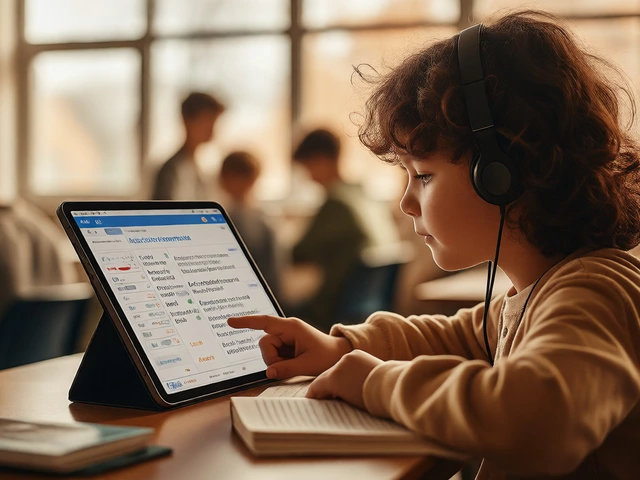
Support for cognitive needs focuses on accommodation. Extra time on exams, using text-to-speech software, or breaking tasks into smaller chunks are standard strategies. The goal isn’t to "fix" the brain but to provide tools that bypass the processing bottleneck. For instance, if reading is the barrier, audiobooks remove it, allowing the student to demonstrate their actual knowledge.
Physical and Sensory Disabilities
Physical disabilities impact mobility, dexterity, or sensory input. Unlike cognitive issues, these are often visible. They include conditions affecting the musculoskeletal system, such as cerebral palsy or muscular dystrophy, as well as sensory impairments like blindness or deafness. The challenge here isn’t understanding the material; it’s accessing it.
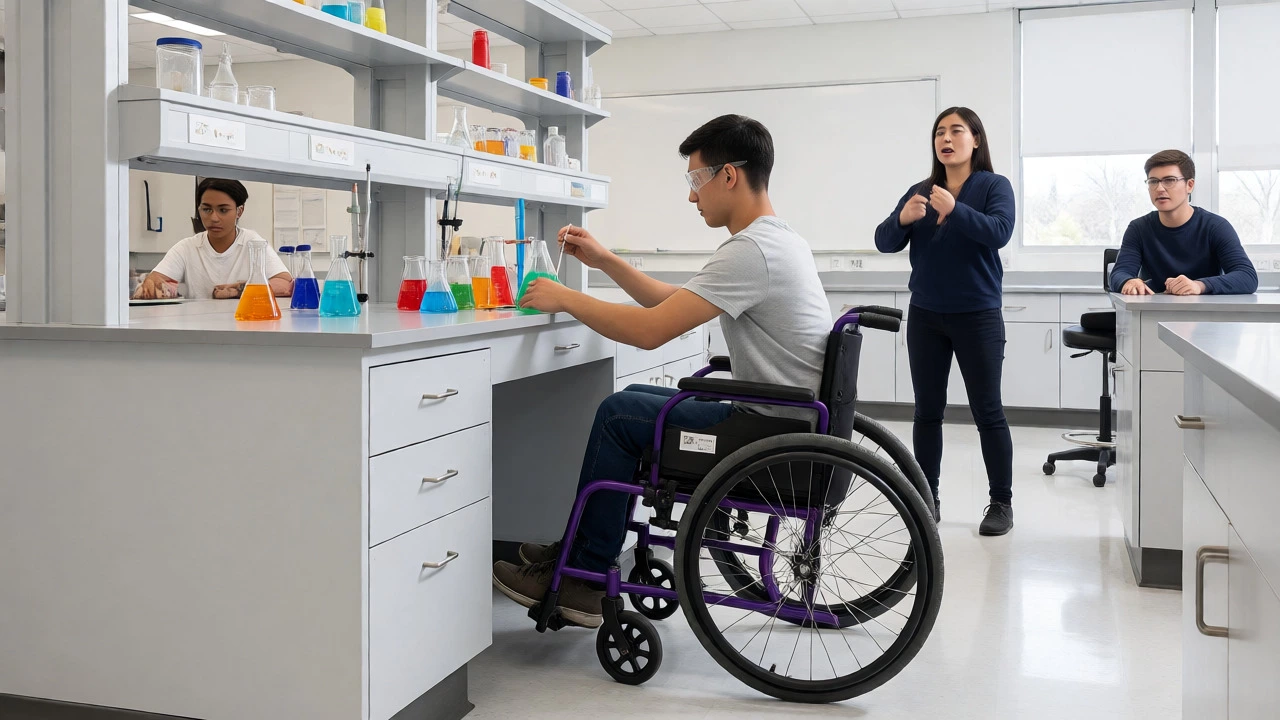
Imagine trying to read a textbook while wearing thick gloves and blindfolded. That’s the daily reality for many students with physical limitations. The curriculum might be perfectly suited to their intellect, but the environment is hostile. If a science lab has high counters, a wheelchair user can’t do experiments. If a lecture relies entirely on audio without captions, a deaf student misses half the content.
The solution lies in accessibility modifications. Ramps, adaptive keyboards, sign language interpreters, and screen readers are essential. These are not "cheats"; they are equalizers. When we remove the physical barrier, the student’s true academic potential shines through. It’s crucial to remember that physical disability does not imply intellectual delay. Many individuals with severe physical limitations have average or above-average IQs.
Emotional and Behavioral Disorders
The third category, emotional and behavioral disorders, is perhaps the most misunderstood. These conditions affect mood, behavior, and social interaction. Examples include anxiety disorders, depression, oppositional defiant disorder (ODD), and post-traumatic stress disorder (PTSD). These are internal struggles that manifest externally as disruptive behavior or withdrawal.
A child acting out in class isn’t necessarily "bad." They might be battling intense anxiety that makes raising their hand feel physically impossible. Or they might be dealing with trauma that triggers a fight-or-flight response during group work. Traditional disciplinary measures often fail here because they treat the symptom, not the cause. Sending a traumatized child to detention doesn’t teach them coping mechanisms; it isolates them further.
Effective support involves mental health interventions, counseling, and creating a safe, predictable environment. Teachers trained in trauma-informed care can de-escalate situations rather than punishing them. Social-emotional learning (SEL) programs help students identify their feelings and develop resilience. The key is recognizing that behavior is communication. When a student shuts down or explodes, they are telling us something is wrong.
Why Distinguishing Between Them Matters
You might wonder, why split them into three neat boxes? Real life is messier. Many people have comorbidities-a student could have both autism (cognitive/neurodevelopmental) and anxiety (emotional). However, clear categorization helps allocate resources efficiently. Funding streams, specialist staff, and equipment budgets are often tied to these classifications.
For example, a school budgeting for wheelchairs addresses physical needs. A budget for speech therapists addresses cognitive or communication needs. A budget for school counselors addresses emotional needs. If you misclassify a need, you apply the wrong fix. Treating a physical limitation with behavioral therapy won’t help a student walk faster. Treating an emotional disorder with extra homework might increase anxiety.
| Type | Primary Challenge | Common Examples | Key Support Strategy |
|---|---|---|---|
| Cognitive/Learning | Information processing | Dyslexia, ADHD, Autism | Accommodations & specialized instruction |
| Physical/Sensory | Mobility & access | Cerebral Palsy, Blindness, Deafness | Accessibility modifications & assistive tech |
| Emotional/Behavioral | Mood & regulation | Anxiety, Depression, PTSD | Mental health support & safe environment |

Navigating the Grey Areas
While the three-type model is useful, it’s important to avoid rigid labeling. Neurodiversity is a spectrum. Two children with the same diagnosis can have vastly different experiences. One child with ADHD might be hyperactive; another might be inattentive and quiet. Both need support, but very different kinds.
Furthermore, cultural context plays a role. In some communities, emotional distress is somatized-expressed as physical pain rather than sadness. This can lead to misdiagnosis if clinicians only look for classic Western symptoms. As an educator or parent, keep an open mind. Listen to the individual, not just the label. What works for one student with a specific condition might fail for another.
Collaboration is vital. Parents, teachers, doctors, and psychologists must communicate. An Individualized Education Program (IEP) or equivalent plan should reflect the whole child, not just one diagnostic code. If a student has a physical disability that causes chronic pain, that pain impacts their emotional state and ability to concentrate. Ignoring those connections leads to incomplete support.
Actionable Steps for Parents and Educators
So, what do you do with this information? First, observe patterns. Is the struggle consistent across subjects, or isolated to reading? Does it happen at home too, or only at school? These clues point toward which category the primary need falls under.
- Document specifics: Keep a log of behaviors and academic performance. Note times of day, triggers, and successful interventions.
- Seek professional assessment: Don’t rely on guesswork. Educational psychologists and pediatricians can provide formal diagnoses that unlock legal rights and funding.
- Prioritize strengths: Focus on what the student *can* do. Build confidence through areas of interest before tackling deficits.
- Advocate for accommodations: Learn your local laws regarding special educational needs. You have the right to request specific supports.
Remember, a diagnosis is a tool, not a destiny. It explains why things are hard, giving you a roadmap to make them easier. By understanding whether the barrier is cognitive, physical, or emotional, you can choose the right key to unlock the door.
Are learning disabilities the same as intellectual disabilities?
No. Learning disabilities affect specific skills like reading or math, while intelligence remains average or above average. Intellectual disabilities involve broader limitations in cognitive functioning and adaptive behavior, often affecting general learning capacity.
Can someone have more than one type of special need?
Yes, comorbidity is common. A student might have a physical disability like cerebral palsy alongside an emotional disorder like anxiety. Effective support plans address all co-occurring conditions simultaneously.
How are physical disabilities categorized separately from sensory ones?
In educational contexts, they are often grouped together as "physical/sensory" because both require environmental adaptations. However, medically, orthopedic issues (mobility) differ from sensory impairments (vision/hearing). Schools typically handle both under accessibility frameworks.
Is ADHD considered a learning disability?
Technically, ADHD is a neurodevelopmental disorder affecting executive function, not a specific learning disability like dyslexia. However, it significantly impacts learning and is eligible for similar educational accommodations under special needs frameworks.
Do emotional disorders count as special needs in schools?
Yes, when they significantly interfere with a student's ability to learn or interact socially. Schools often provide support through counseling services, behavioral intervention plans, and modified expectations.








Write a comment